Incoming Promovito 2026, by Claire Mumford
Maremma Toscana, Morellino di Scansano and Montecucco
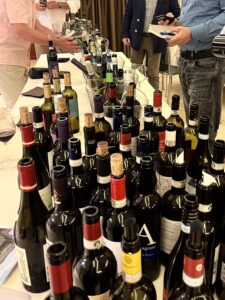
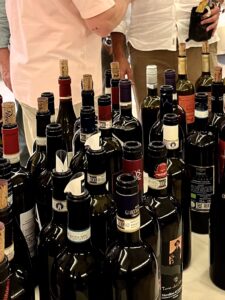
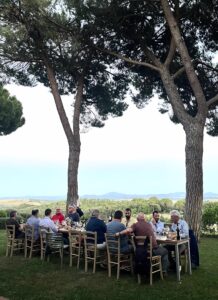
Vines and olives as far as the eye can see, languishing in the mid-June Tuscan heat. It is the height of summer, and I am here to represent NCS at Incoming Promovito in Maremma. The event is jointly organised by the Consorzios Tutela Vini Maremma Toscana, Tutela Vini Morellino di Scansano and Tutela Montecucco. The three consorzios co-host a presentation on the first evening, followed by a comprehensive regional tasting of thirty-five wineries. The subsequent winery visits were well curated, placing the quality of this region’s wine and gastronomy firmly and deservedly in the spotlight.
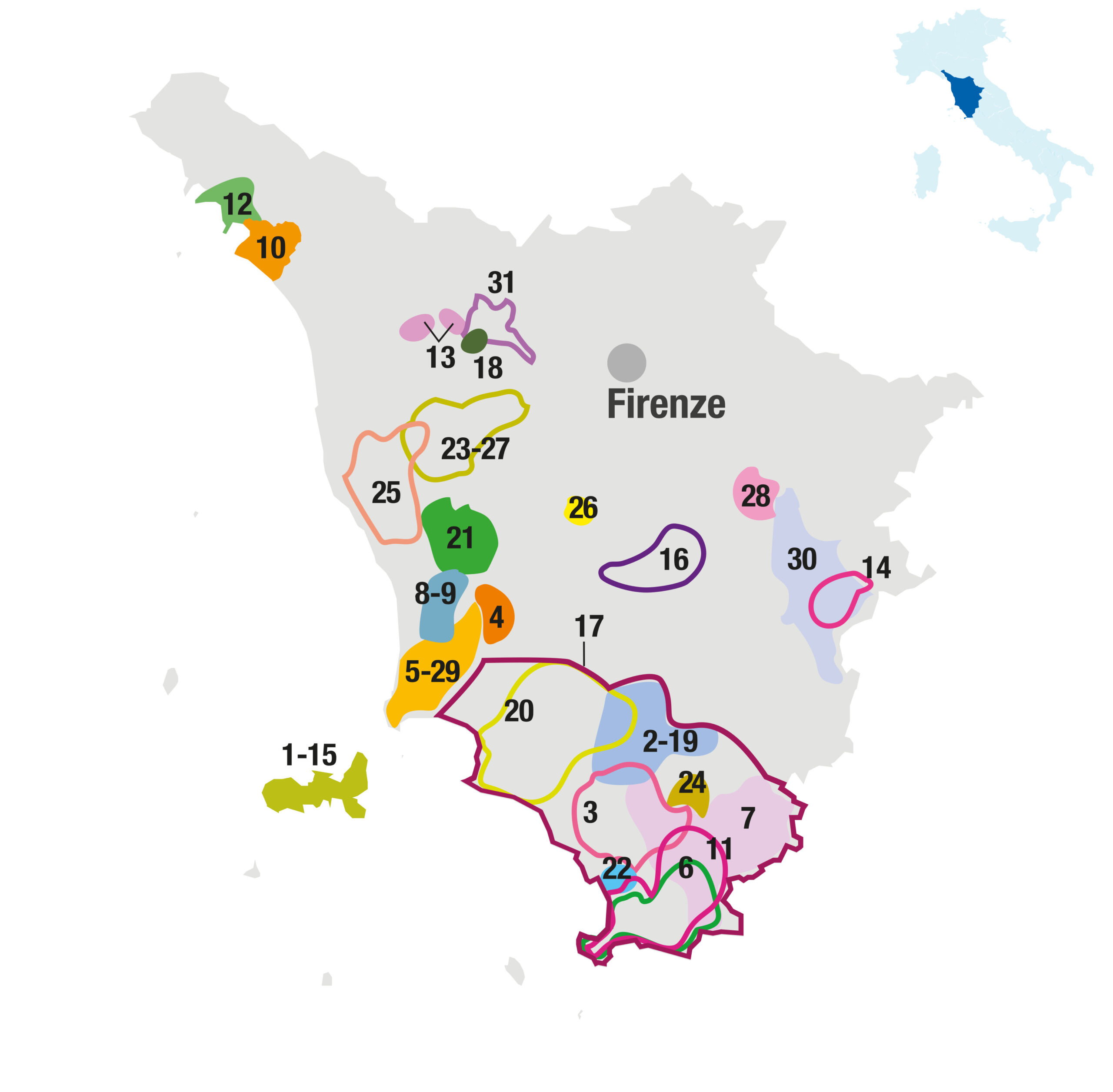
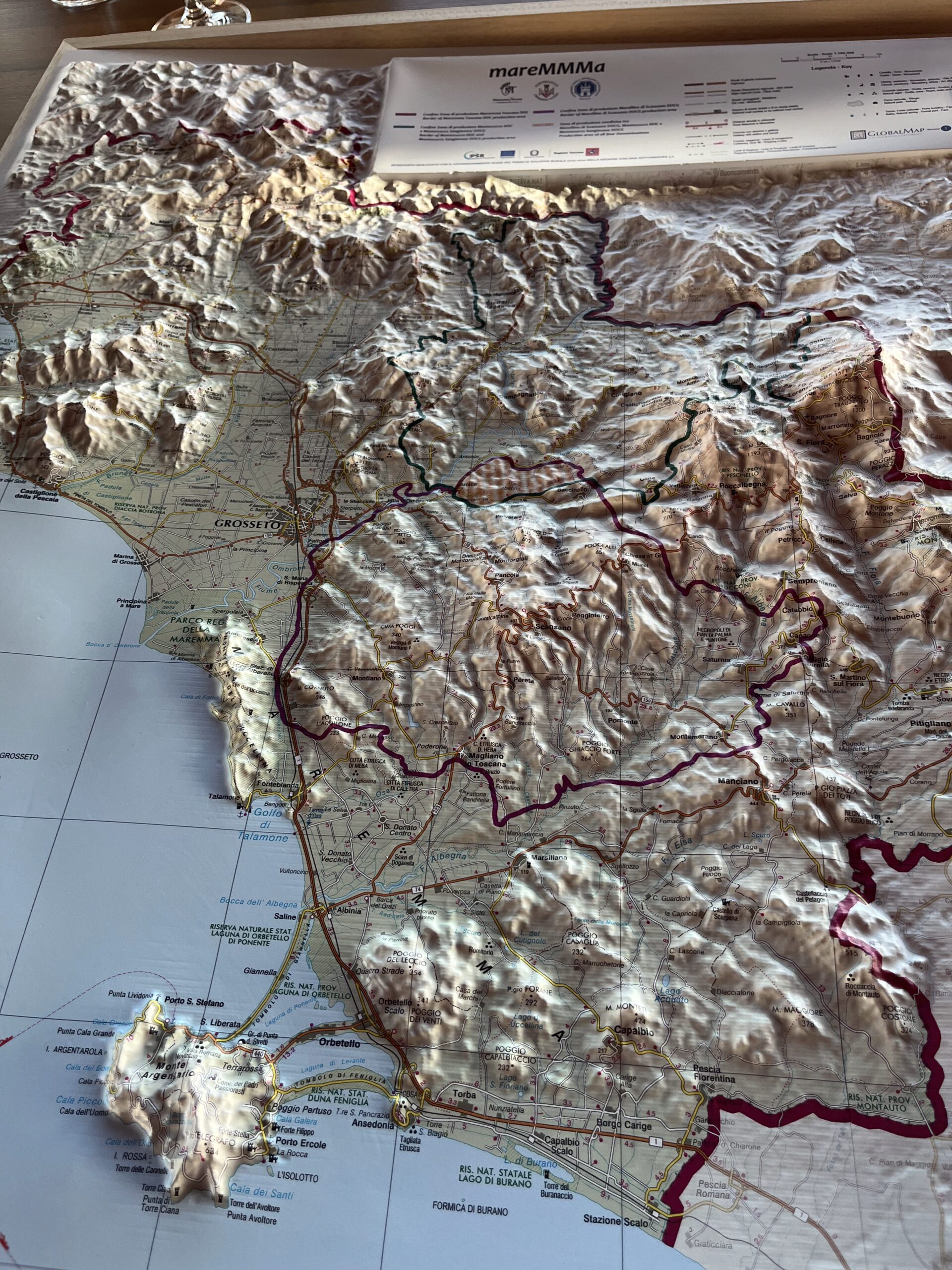
Maremma is situated in the western part of Tuscany, in Italy’s Grosseto region. The coastline bordering the Tyrrhenian Sea is extensive, extending from northerly Bolgheri to where Tuscany meets Lazio in the south. Here the maritime influence is significant: cool air tempers the warm Mediterranean climate on sandy coastal plains. Further inland, Maremma’s landscape steadily rises to meet Monte Amiata, where clay and volcanic tufa feature more prominently. Sea breezes are less impactful, and temperatures are generally higher as a result. Diversity of soils and topography account for the range of wine styles we find here, from crisp Vermentino to highly structured Sangiovese.
Whilst many Tuscan regions are experiencing a decline in production, the relatively young production area of Maremma is flourishing. Following worldwide trends, white wines – here mainly Vermentino and Ansonica – are growing in popularity. For reds, Sangiovese and local varieties such as Ciliegiolo share the stage with the international grapes Cabernet Sauvignon, Merlot and Syrah. The Consorzio Tutela Vini Maremma Toscana was established in 2014 to protect and promote the wines of the region and their producers. Morellino di Scansano and Montecucco operate independently within the larger Maremma Toscana designation.
Le Mortelle
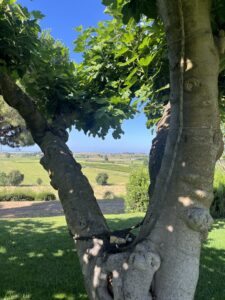
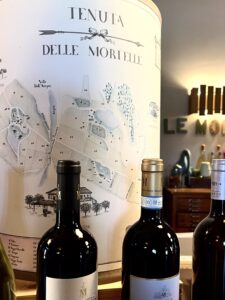
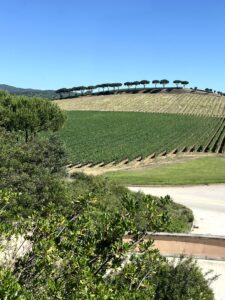
First stop in Maremma is the Antinori property Le Mortelle, in Ampio. A row of lush fig trees offers welcome respite from the heat whilst we are introduced to the estate’s story; Le Mortelle is one of nine Tuscan properties belonging to the family, each designed to showcase particular varieties, climates and soils. Cabernet Sauvignon and Cabernet Franc thrive here, in the cooler growing conditions proximity to the coast provides: Antinori reserves Sangiovese for its warmer inland sites.
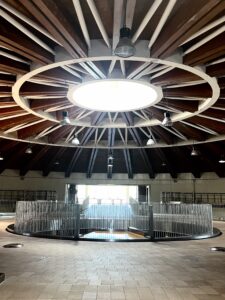
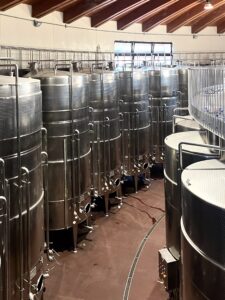
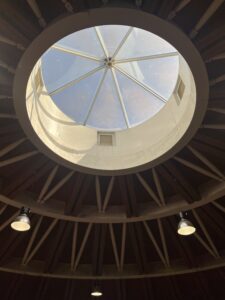
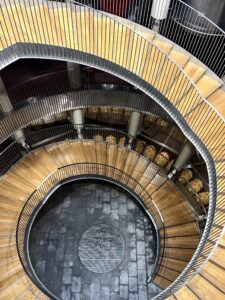
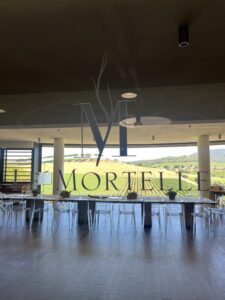
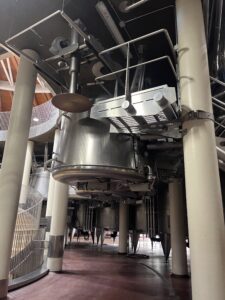
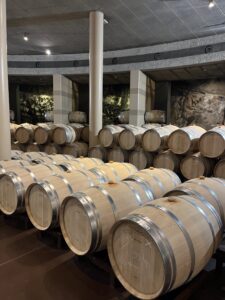
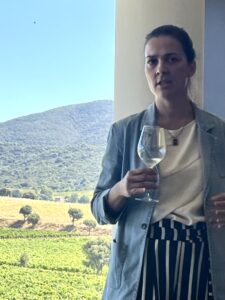
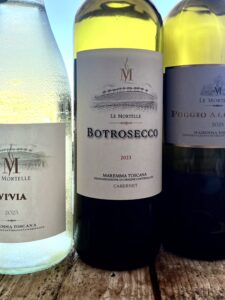
The cellar is impressive by any stretch of the imagination. Cylindrical in form, the entire building is below ground – enabling gravity flow at all stages of winemaking, and reducing the need for pumps. Grapes are brought in at ground-floor level. A large spiral staircase in the centre leads to the lower floors, where the grapes, gravity-fed from above, are processed. Precision machinery is responsible for punch-downs, sparing the cellar hand much strenuous labour. The basement section houses a vast circular expanse of barrels, where wines are aged: the surrounding bedrock provides natural temperature and humidity control. Form and function are very much in harmony here, and this principle extends to the tasting room, with its spectacularly panoramic view of the vineyards. Winemaker Georgia Dimitriou joins us for a tasting of three very different wines; Vivia, Botrosecco and Poggio Alle Nane. Vivia is a blend of Vermentino, Viognier and Ansonica: it is fresh and lean in style, with notes of citrus and green apple. Cabernet Sauvignon and Cabernet Franc join forces in Botrosecco, which is aged for ten months in used barrels. It has lovely violet aromatics and crunchy, ripe black cherry fruit. Poggio Alle Nane is Cabernet Franc dominant, with smaller percentages of Cabernet Sauvignon and Carmenère. The wine spends time in partly new oak, and although structured, it is plush. Within this select portfolio, Antinori has established a diverse range with broad appeal.
Valentini
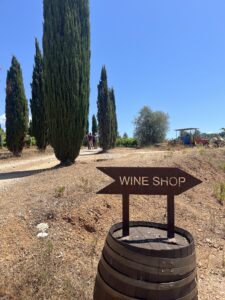
Azienda Agricola Valentini is a small family winery in Maremma, farming organically to produce wines and olive oils. Owner Giovanni’s son Luca, accompanied by sister Chiara, tells us that his father originally planted two hectares as a field blend, in 2005. This traditional approach has since made way for larger parcels and more efficient ways of working. The family now farms thirty-five hectares of land, including vineyards, olive groves and woodland. Luca speaks of the difference between olive varieties — some are bitter, some sweeter. Just as with vineyards, climate and soil play a role: Tuscan olive oil is generally spicier, for example, than that of Puglia.
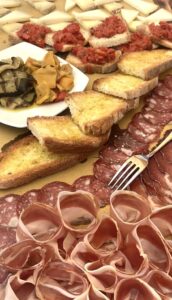
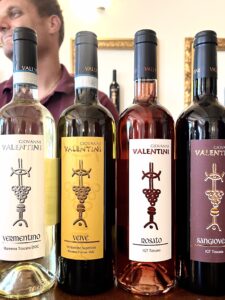
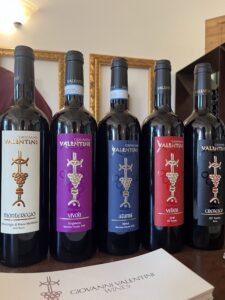
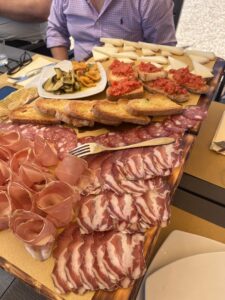
Luca makes two Vermentinos, a variety he claims is the most iconic white variety of Maremma. The first is fresh and fruity in style. The second, Veive, is transferred mid-ferment from stainless steel to old tonneaux, where it spends a further twelve months, giving notes of sweet wood spice. Luca uses a strain of yeast which is the winery’s own selection, isolated and developed over past years. He ferments his reds in stainless steel, either moving post-ferment to lined concrete — which offers a more stable, neutral ageing environment — or to barrels, depending on the cuvée. Luca makes a large range of DOC and IGT wines from Sangiovese and international varieties. Atunis, for example, is 100% Merlot: its full-bodied, robust qualities and high alcohol are somehow kept in check, for the wine is not heavy. We enjoy sampling Valentini’s olive oil during a delicious lunch, accompanied by a selection of the wines. These paired very well with the superb antipasti and the freshly-made spinach and ricotta pasta. They are wines that invite food pairing, not least by virtue of their pure character. Farming here is exclusively organic.
Montauto
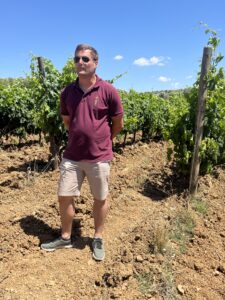
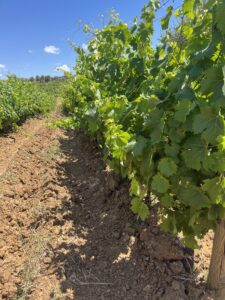
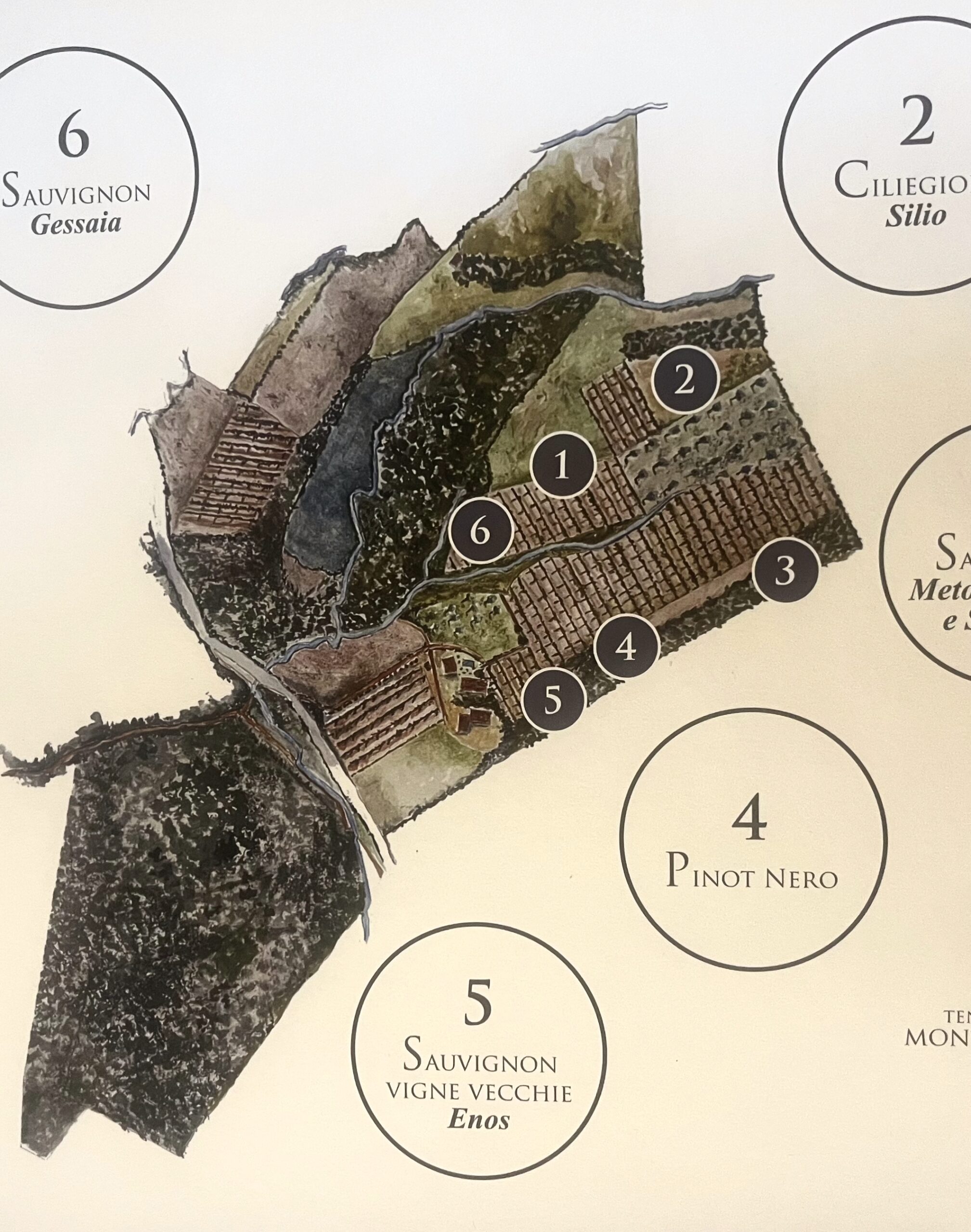
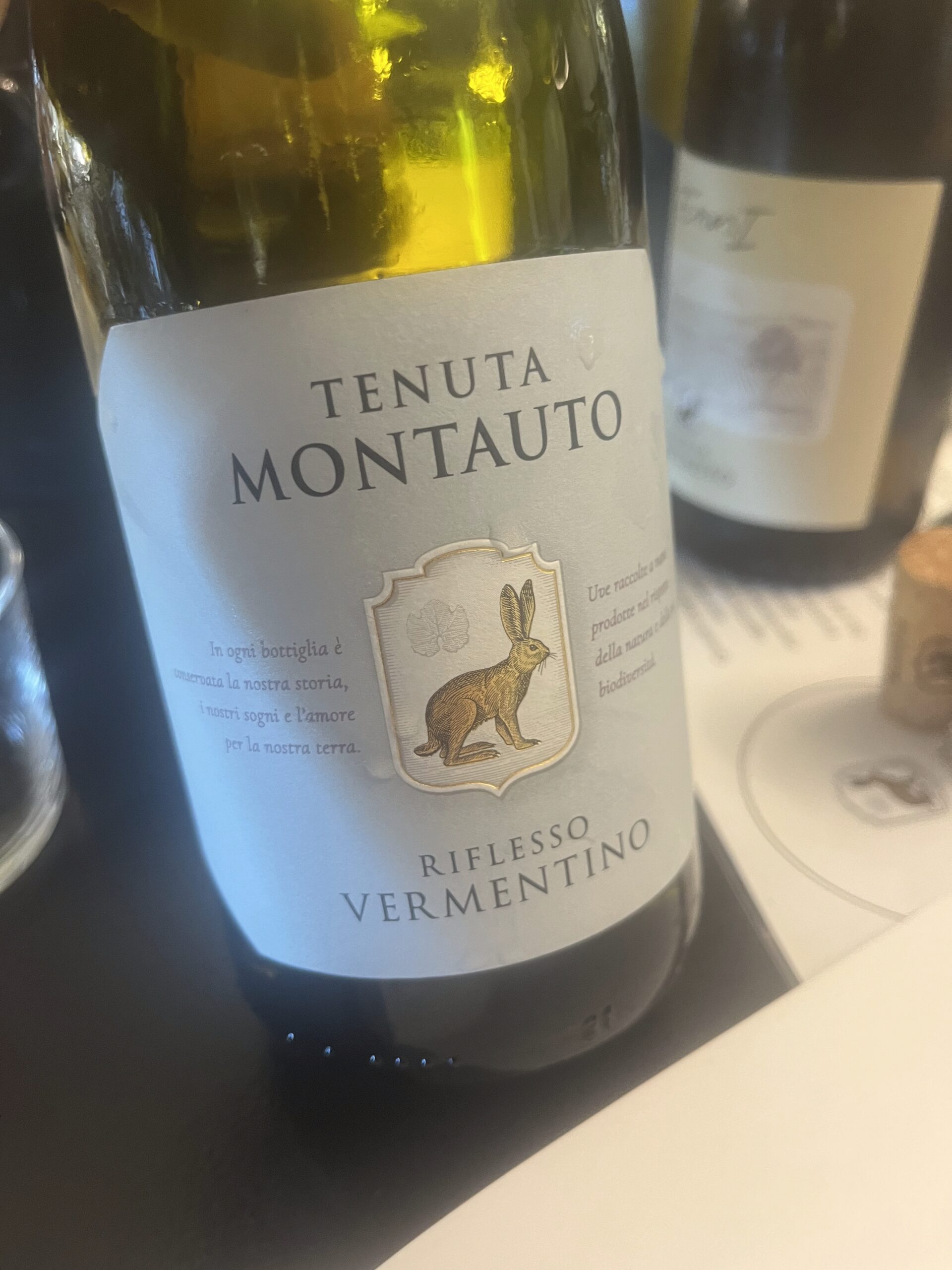
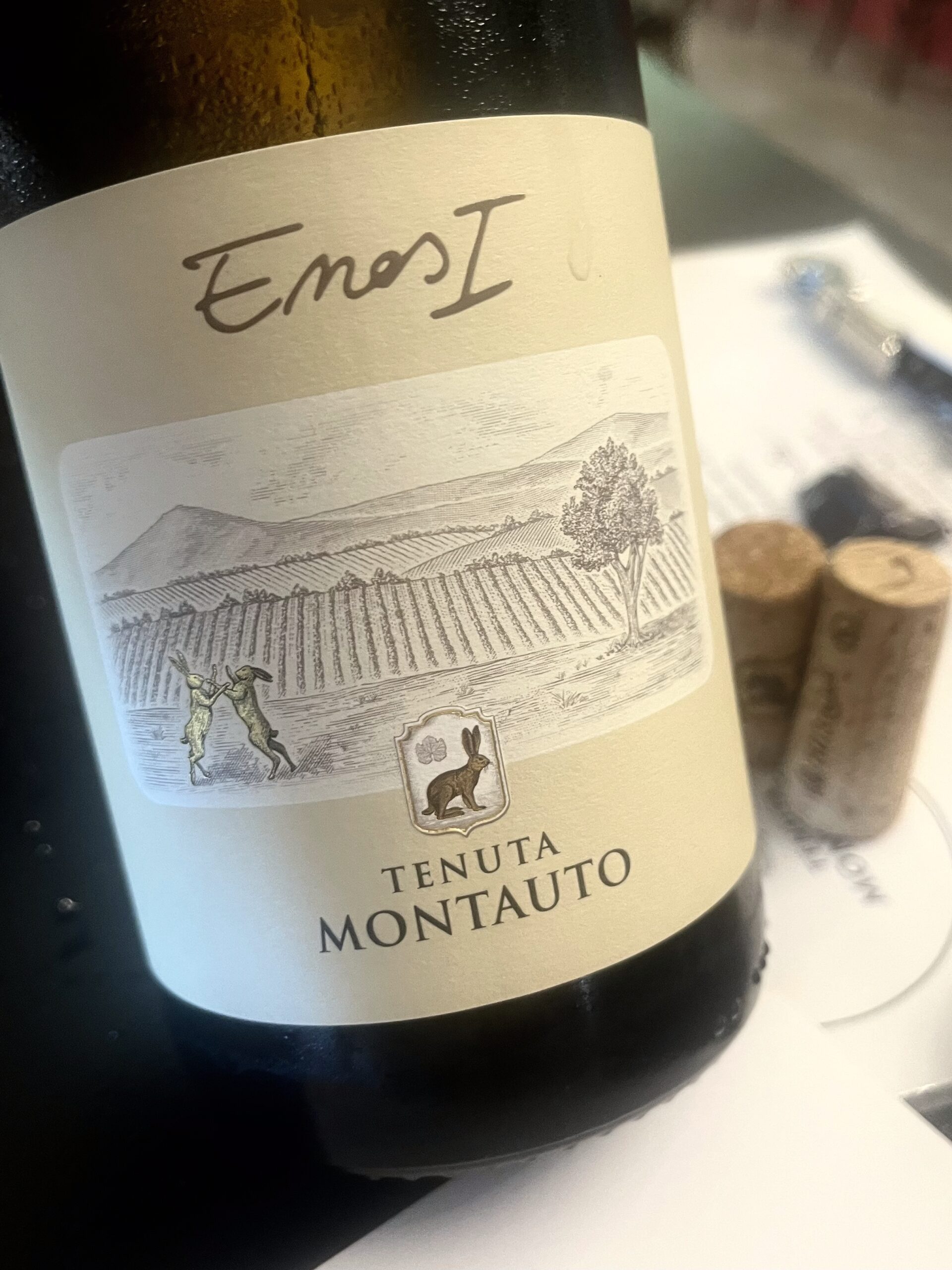
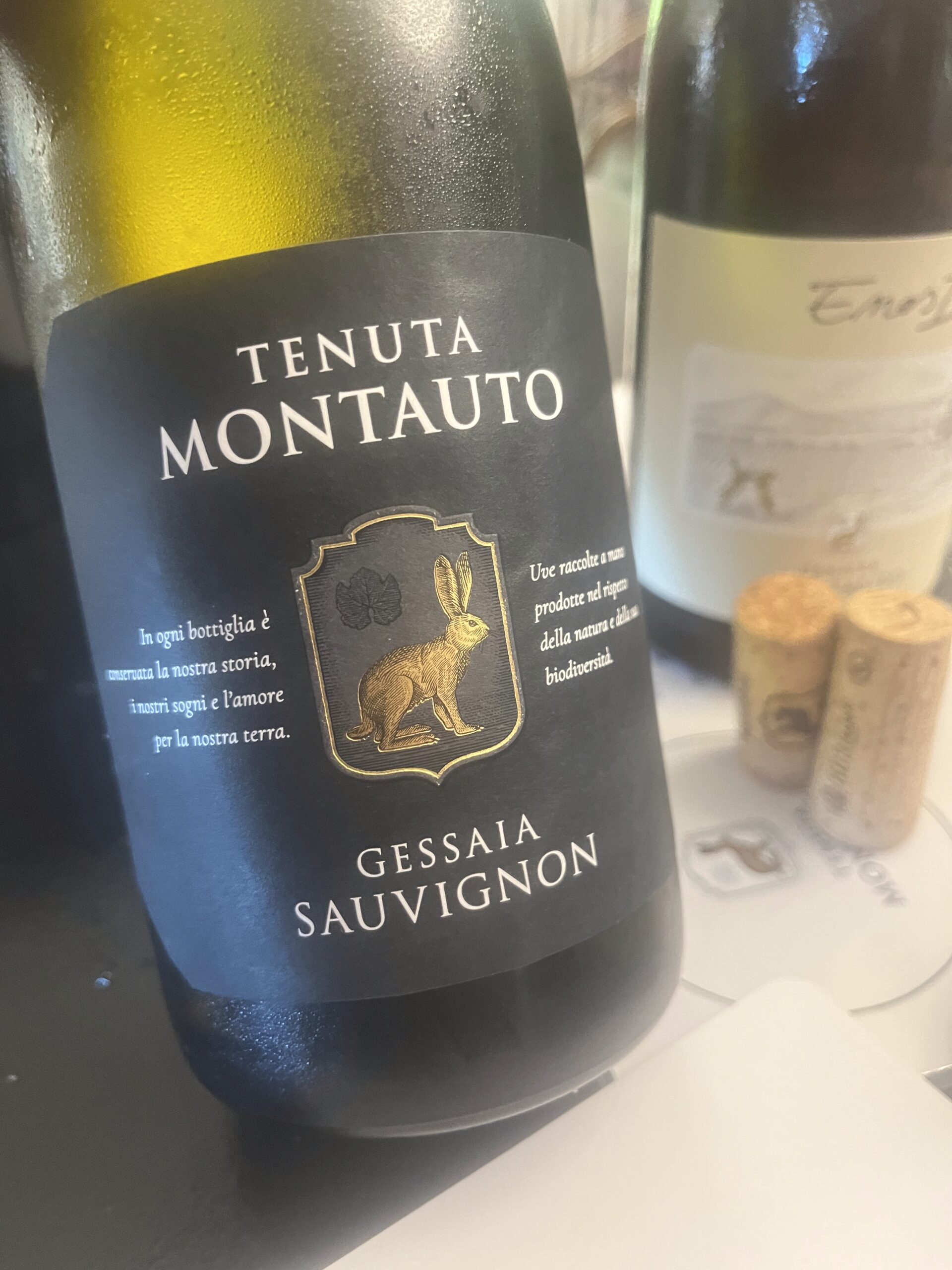
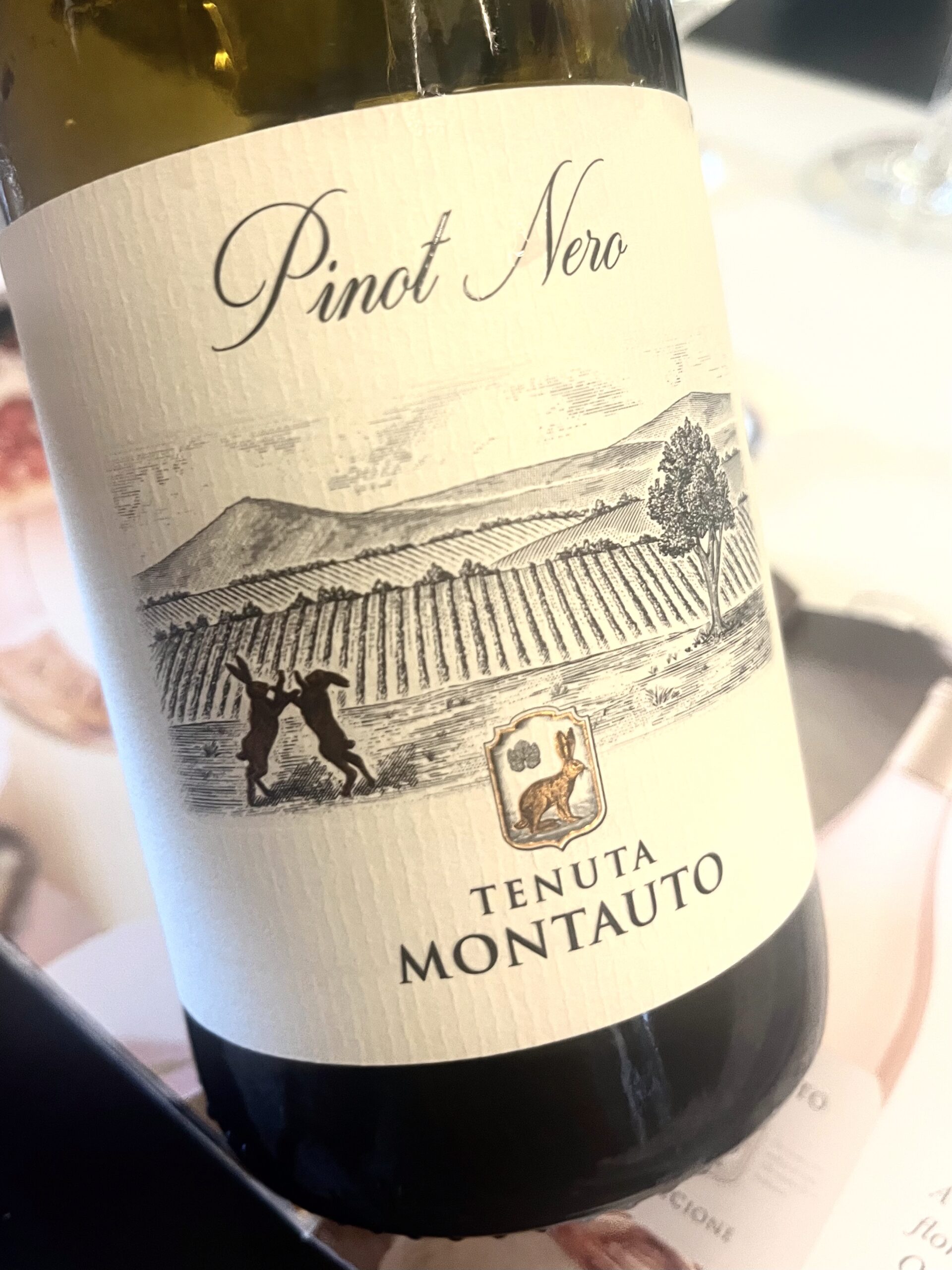
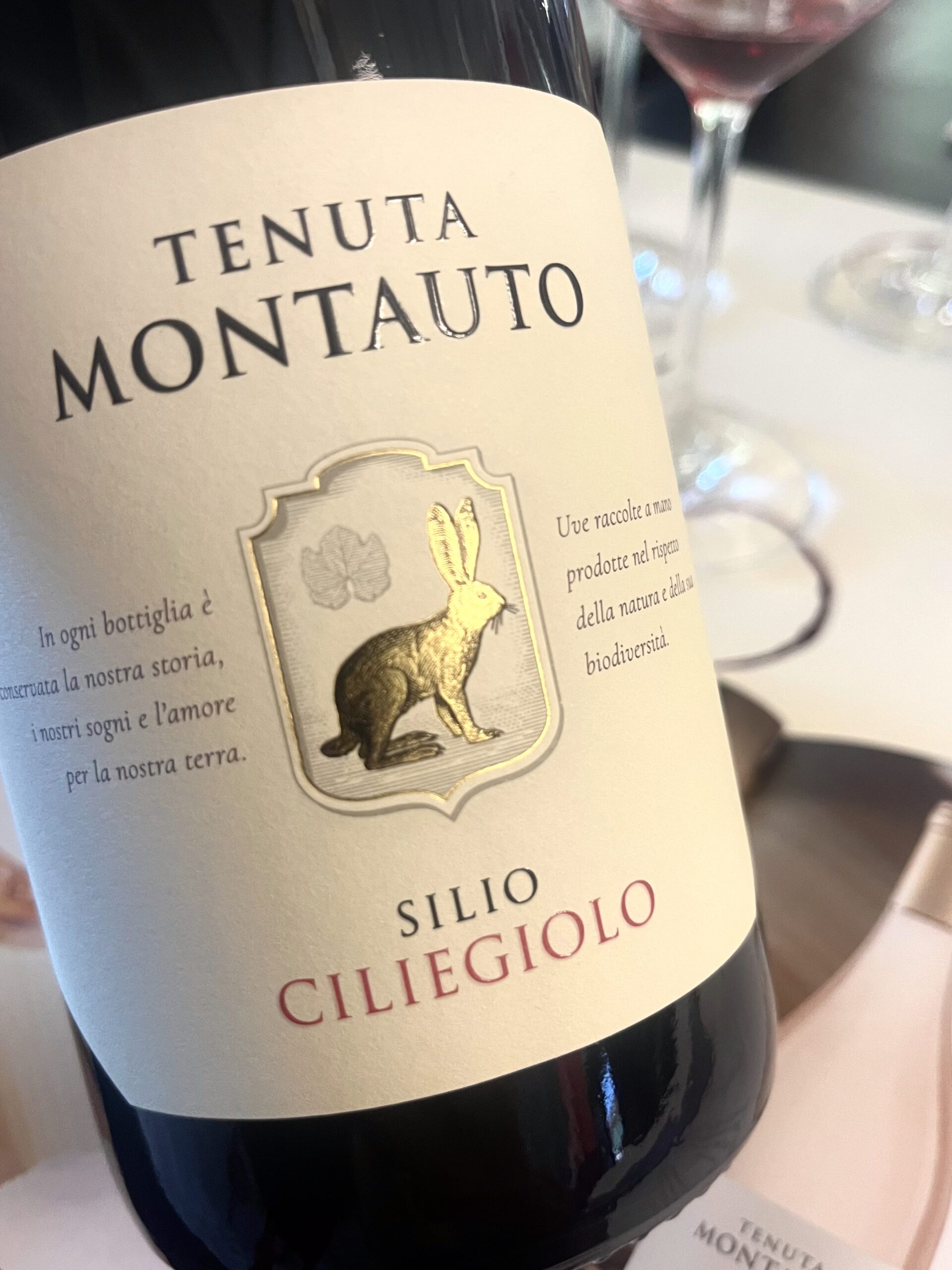
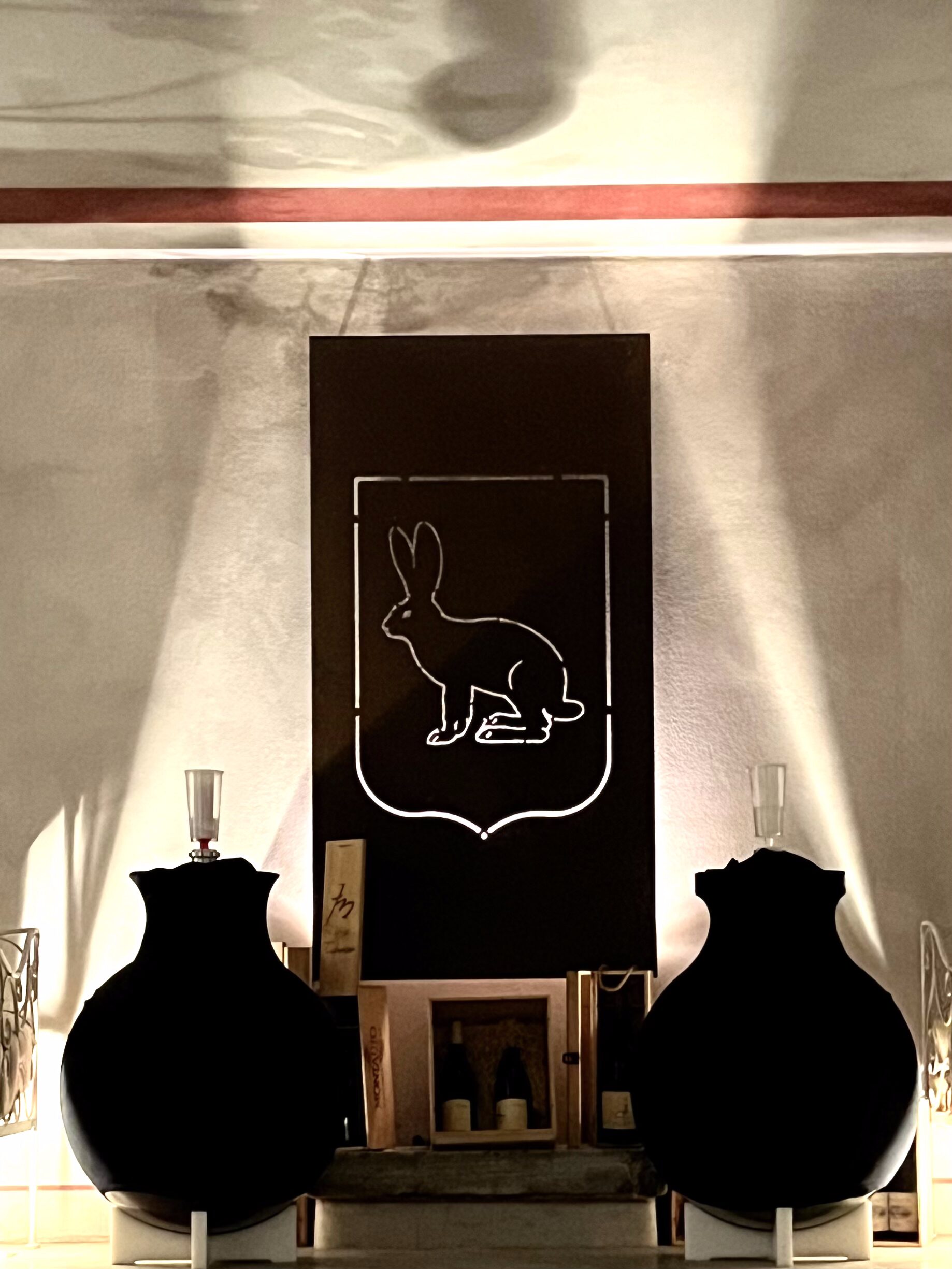
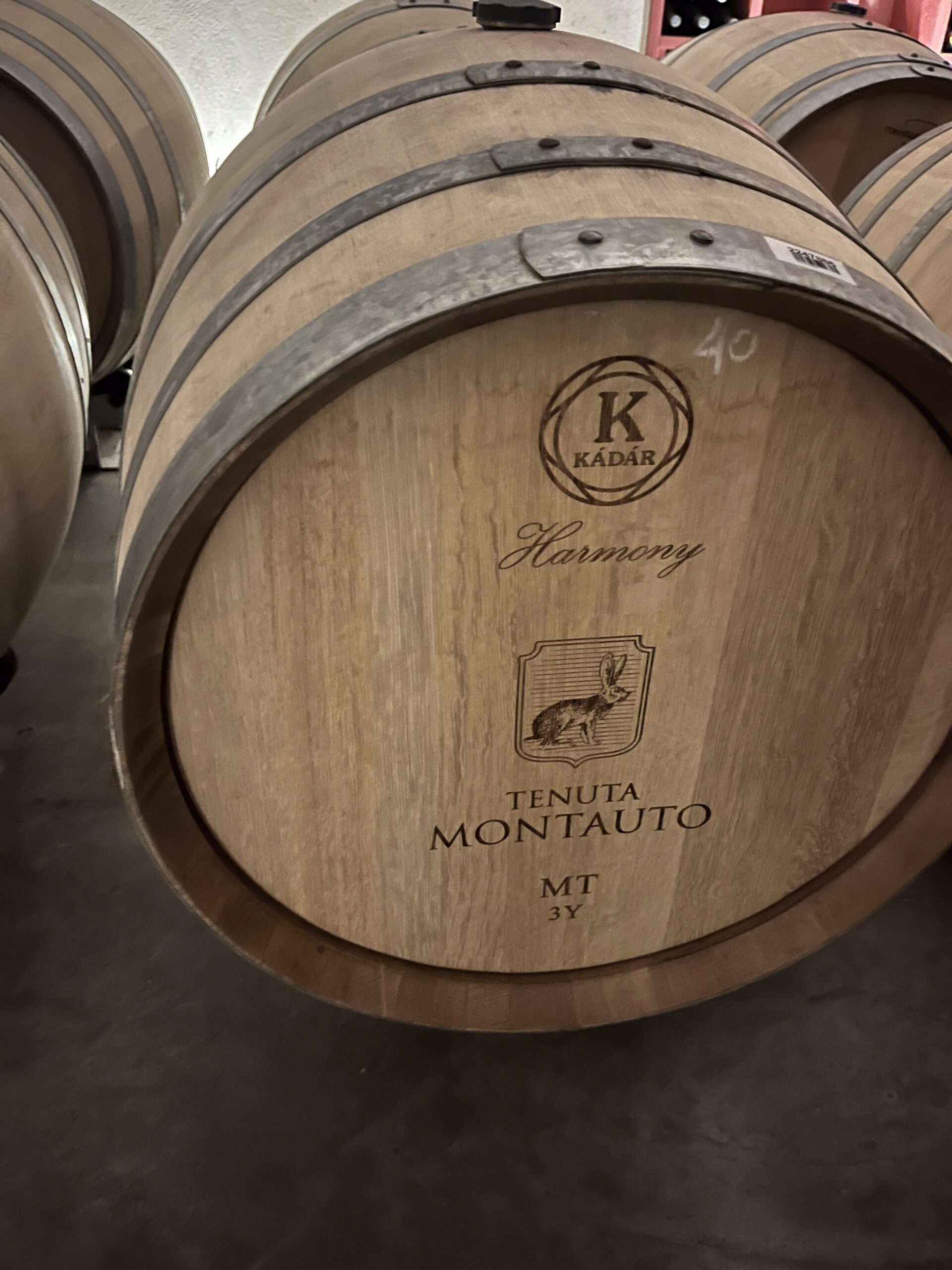
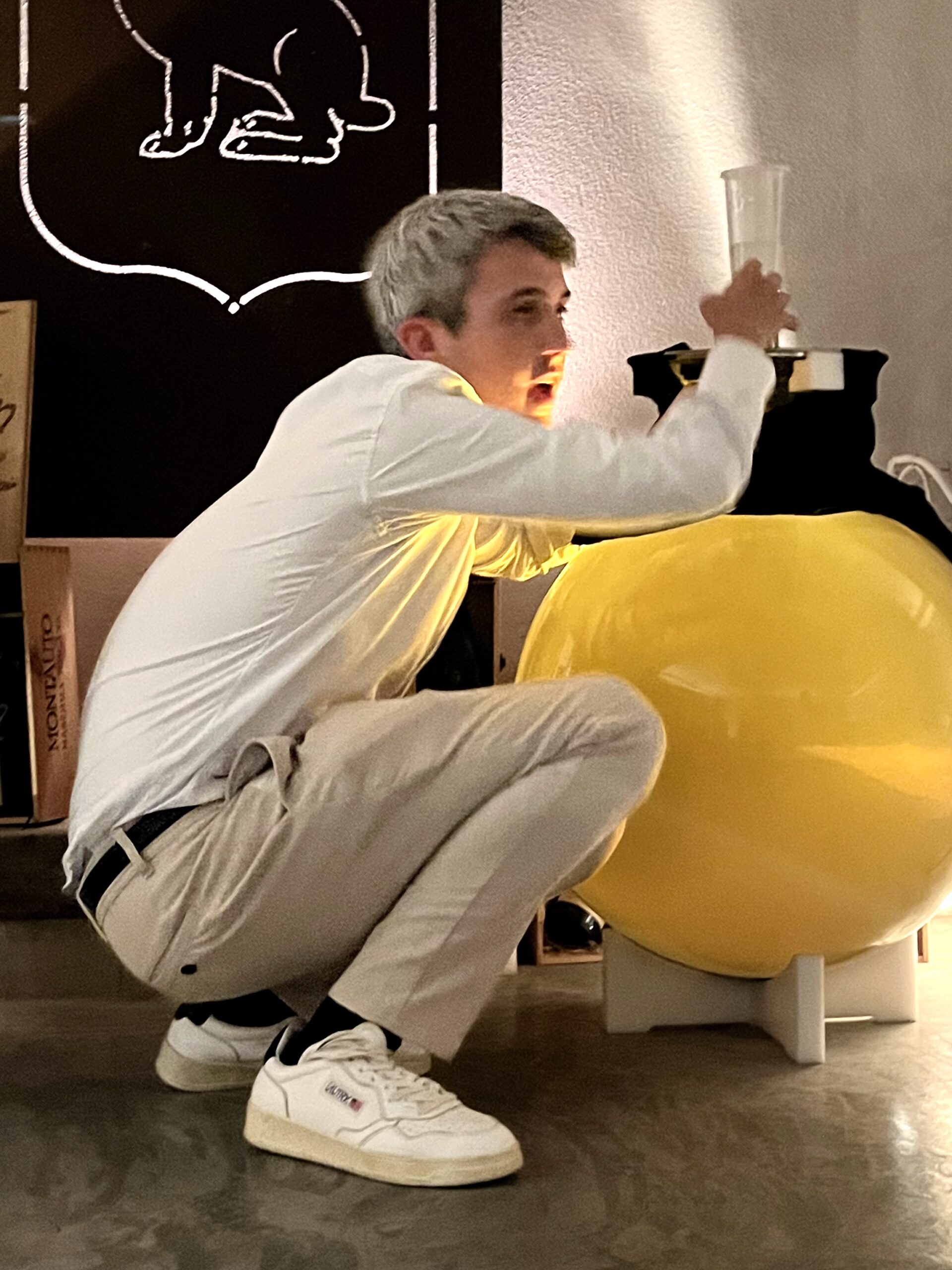
Our most southerly visit was to Tenuta Montauto, near Manciano. It stood out in many ways. For one, this was the only metodo classico I encountered, despite a fair chunk of Maremma being coastal. This sparkling wine is made from Sangiovese and spends three years on lees, resulting in crisp, juicy grapefruit citrus and a fine, creamy bubble. I was also delighted to try a monovarietal Ciliegiolo, a grape native to these parts: I found it rustic, sanguine and brambly with juicy rhubarb tartness and powdery tannins. We tasted two Sauvignon Blancs made from separate soil types. Gessaia is grown on a chalk seam, the resulting wine being restrained yet juicy, with good texture. Enos 1 is made from forty-year-old vines, planted on clay-rich quartz by founder Enos Lepri. The wine sees no oak but is richly textured and generous, its fruit offset by salinity. Another surprise was the Pinot Nero; after overnight cold maceration, the grapes are fermented in barrel, with a third subsequently ageing in new oak barrels. Wild strawberry and spice, with soft, rounded tannins, it is unmistakably pinot. All of the wines display a intense fruit character inherent to the variety, indicating a thorough understanding of the vine and a thoughtful hand in the cellar.

Morellino di Scansano is a DOCG designation for red wines only, made principally from the Sangiovese (known locally as Morellino) grape. The area is located in the southernmost part of Maremma, spanning the plain of Grosseto to the coast. Soils are generally quite shallow and fall largely into two types: sandstone to the west, limestone and clay to the east. Despite its predominantly coastal position the vines in Morellino di Scansano benefit from extended ripening, this being due to a wide temperature range between day and night.
Roccapesta
The midday heat is stifling as we approach Roccapesta; unsurprisingly, this is a topic as we tour the vineyard. Our guide informs us that grass cover here not only helps to keep moisture in the soil, but serves to lower temperatures at ground level by a significant seven or eight degrees. A high proportion of clay in the soils also helps retain water. At Roccapesta, we are told, the intention is to prioritise a natural balance in the vineyards, which in turn forms the basis for a true expression of Sangiovese from Scansano. To this end, an extensive research project — Il Progetto Morello — was launched in 2023, documenting how the thirty-five biotypes of the variety planted here respond to differing soils, aspects and microclimates. In line with this approach, the wines are made using natural yeasts in neutral vessels, and are not filtered. Two of these specific research sites have resulted in the wines Vigna Liuzza and I Gaggioli, which we were able to taste. Although the winemaking was similar the wines present differently. The first is grown at 300 metres altitude, on clay and iron-rich soils, resulting in a structured, concentrated wine. The second is grown on galestro – a rich mix of clay, limestone and schist – at a higher altitude of 450 metres, bringing finesse and elegance. Our guide stresses that the distinct character of Sangiovese in Scansano is a result of the intensity of light — rivalled, in Italy at least, only by that of Sicily. The wines are highly distinctive, and whilst the range is wide, the focus here is most definitely on the premium range.
Castello di Montepò
The name Biondi Santi is inextricably linked with Brunello di Montalcino. In the mid-19th century, pharmacist Clemente Santi, followed by grandson Ferruccio Biondi Santi, isolated a particular biotype of Sangiovese Grosso, and named it Brunello – little dark one – on account of its thick, deeply coloured skins. Ferruccio used this new biotype to create the iconic Brunello di Montalcino. The legend continued through the family, with each subsequent generation embracing and developing this signature wine.
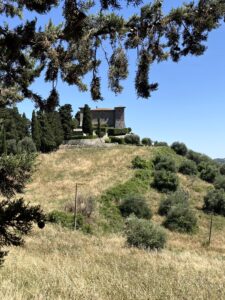
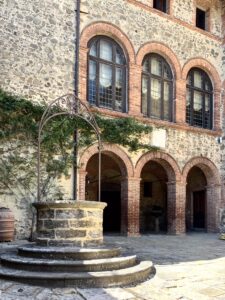
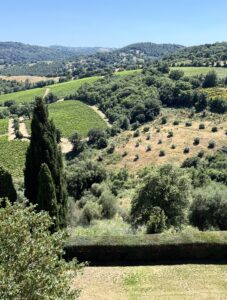
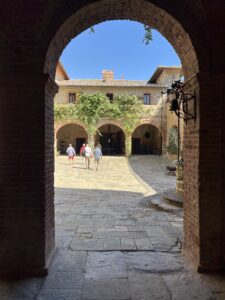
Being born into a winemaking dynasty has its advantages – but also its drawbacks. By the late 1980s, sixth generation Jacopo Biondi Santi was keen to explore a different side of Sangiovese, wanting to freely pursue a varietal expression other than that of the flagship Brunello. For this he needed a new site. After much searching, he settled on Castello di Montepò, in the heart of Morellino di Scansano. The castle itself dates from the 12th century, and is surrounded by 600 hectares of land. Fifty-two of these are currently under vine, planted mainly to the Sangiovese clone Jacopo brought in from Montalcino, BBS11 (Brunello Biondi-Santi 11). The rocky galestro soils are well suited to this particular Sangiovese biotype, with its small, tight clusters and thick-skinned berries. The property is stunning, perched above a broad, undulating valley.
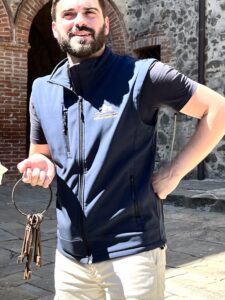
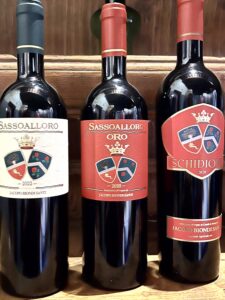
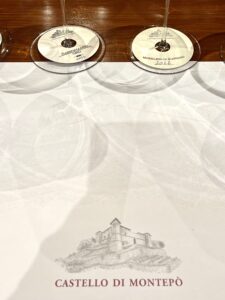
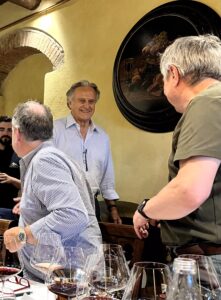
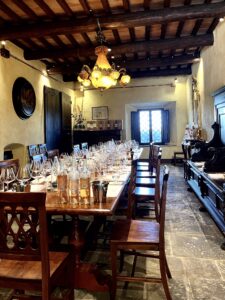
Our guide leads us into the castle to the tasting room, whose grandiose interior lends a certain gravitas to proceedings. The family makes one rosé and seven reds here, from BBS11 Sangiovese, Cabernet Sauvignon, and Merlot, in varying proportions. The wines are mainly classified as IGT Toscana, with one DOCG Morellino di Scansano. The first wine produced here was Sassoalloro, and we taste this alongside the Sassoalloro Oro. The extra time spent in barrel is more evident in the Oro, but in both wines the emphasis lies firmly on fruit, with crisp acidity giving freshness. Oro has more concentration as a result of cold maceration pre-ferment. The cherry and violets of Sassoalloro find a different expression in the cuvée Poggio Ferro (‘Iron Hill’), one of the estate’s three crus. Soils on this south-facing site are iron-rich, giving deep colour and texture. Two years in barrel and a further two in bottle add notes of leather and spice to these structured wines. Premium wines are the focus, as might be expected, given the reputation of this historic family in Tuscany.
Fattoria di Magliano
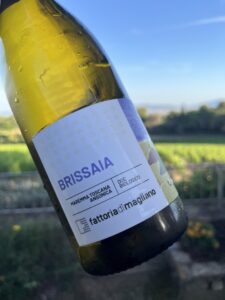
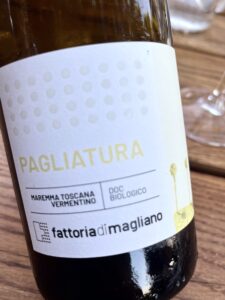
Maremma, according to Nicola Lenci of Fattoria di Magliano, is the Wild West of Tuscany: here, he adds, “anything goes – as long as it works”. It is certainly true that Maremma ripped up the rulebook. Age-old traditions from which legislation was born have no sway; as Nicola remarks, although winemaking practice in this area can be traced back to Etruscan culture, Maremma’s identity is in no way bound to classical appellation structure. This gives winemakers significantly more freedom. Under the watchful eye of celebrated consultant oenologist Graziana Grassini, the winemaking emphasis lies in creating wines with good market appeal, and much thought has gone into developing a solid portfolio range. We try a number of them over dinner. Despite very low current stocks we try the Ansonica (Brissaia DOC Maremma), which has a distinctively saline and green herb character, with lemon and lime citrus. The Vermentino (Pagliatura DOC Maremma) is more fruit-forward, with yellow apple and sweet white peach notes. Heba (DOC Morellino di Scansano) is a lovely fresh and easy-drinking red, a blend of Sangiovese and Syrah. We tasted both the 2019 and 2020 vintages of Poggio Bestiale (DOC Maremma Toscana), a Bordeaux blend of Cabernet Sauvignon, Cabernet Franc and Merlot. This wine is powerfully structured and full-bodied, with rich red and black fruits and dusty tannins. All the wines are organic.
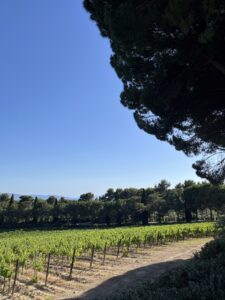
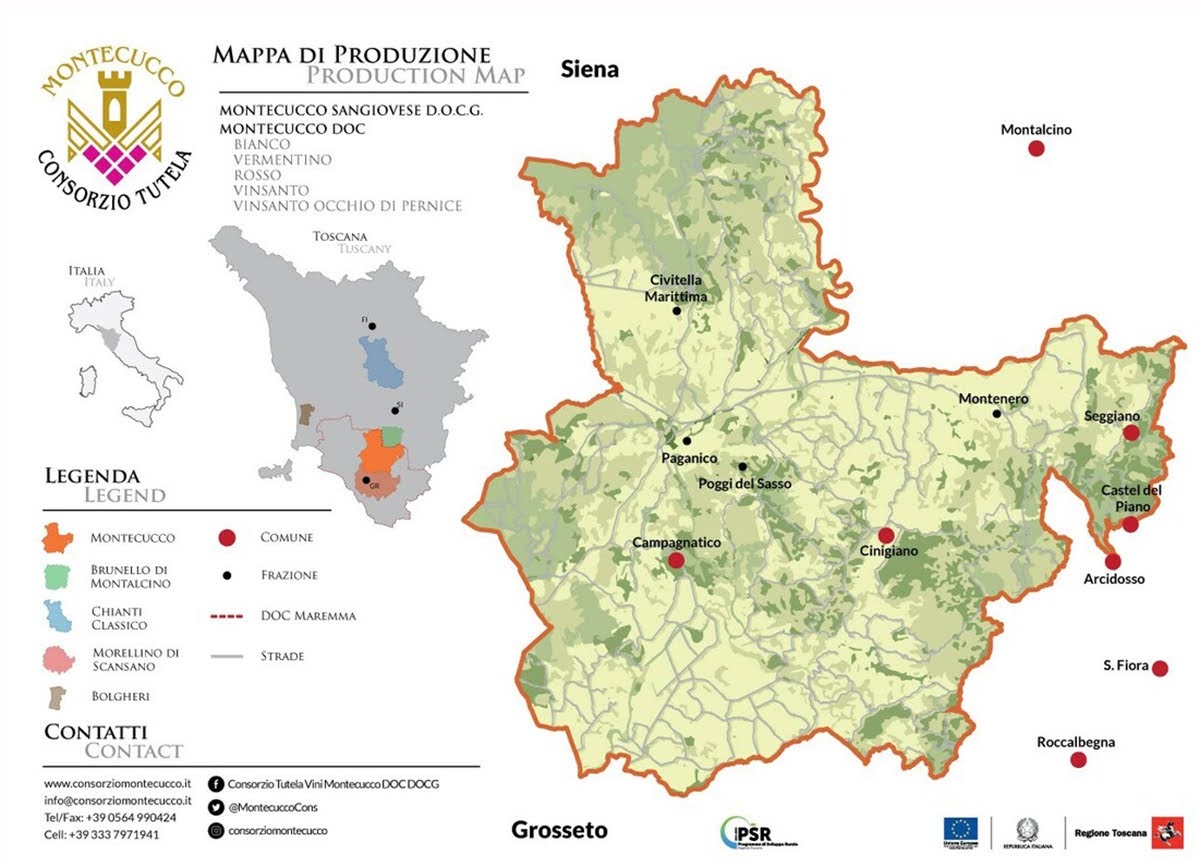
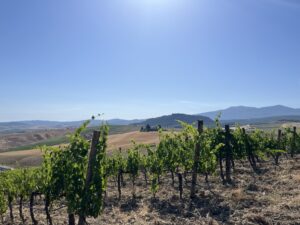
Montecucco is a small inland area situated between Scansano in the foothills of Monte Amiata, bordering on Montalcino. It received its DOC status in 1998 and produces a wide range of red and white wines, predominantly from native Sangiovese and Vermentino. At 1700 metres, the extinct volcano Monte Amiata forms a natural barrier, creating warmth, and helping to retain moisture in this most south-westerly tip of Tuscany. It has greatly influenced soils here, enriching them with mineral-rich lava composites to give richness and concentration to the wines. Montecucco is a low-yielding area, with a large percentage of organic production.
Azienda Begnardi
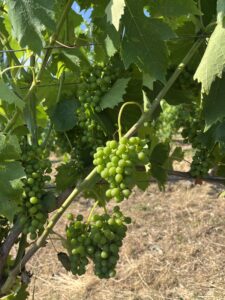
This small family winery is nestled on the slopes of Monte Antica, overlooking the river Ombrone, in Montecucco. Of the forty hectares belonging to the farm, fifteen are planted to vines: 80% of this is Sangiovese, with Vermentino, Pugnitello, Ciliegiolo and Teroldego among the remainder. This last grape is deeply pigmented, and Alessandro tells us it is often used in a blend to boost lighter coloured Sangiovese. Begnardi produces a 100% Teroldego, the IGT Toscana Buio; it is intensely black-fruited and dense, its black olive, meaty notes reminiscent of Syrah. In contrast, the DOC Montecucco Rosso Begnardi, a blend of Sangiovese and Ciliegiolo, is bursting with crunchy red fruits and is peppery, with fresh acidity. Each wine tasted displayed a distinct flavour profile: IGT Ceneo (100% Sangiovese) is invitingly perfumed, with aromas of dried red fruits and talcum, whilst the Vermentino Hastalis, grown on limestone, has an expressive citrus and wet stone character, with a pleasant bitter note to finish. These are on the whole attractive wines with broad gastronomic appeal. An interesting aside: Hastalis is the name of a long-extinct mackerel shark, thought to be the ancestor of the great white shark. When planting the Vermentino vineyard, many fossils were found in the shell-rich limestone soils, including teeth of the Hastalis shark.
Poggio Stenti
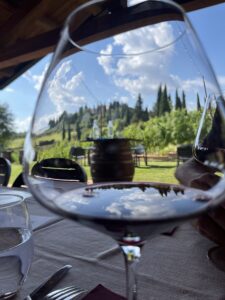
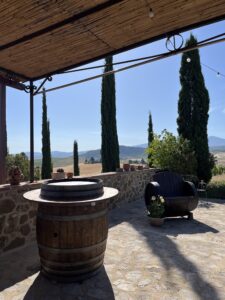
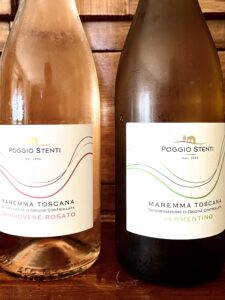
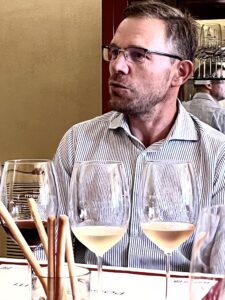
The pool on the patio at Poggio Stenti looks inviting in the heat: a refreshing dip, however, is not on the agenda. We are greeted by Eleanora Pieri: she tells us about her family, who have farmed here for generations, producing wine, olive oil and crops such as barley, spelt and wheat. Six hectares of vineyard are planted mainly with Sangiovese, and farmed organically, as is the whole farm. Eleanora herself produces saffron from a small plot she inherited from her grandparents. The pigs and cattle raised here are butchered by father Carlo, who runs a shop nearby — and has done for the last forty years. We are joined by winemaker Gabriele Gadenz, who provides much valuable insight into both cellar and vineyard practice as we taste the wines.
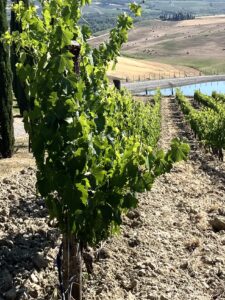
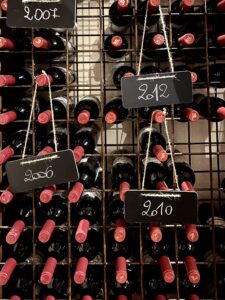
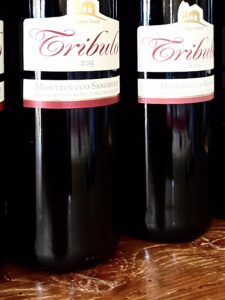
We are in the Alta Maremma; bordering the Val d’Orcia — a stunningly picturesque stretch of valley running through this part of Tuscany. Red wine is clearly the focus — unsurprising, given the growing conditions. Soils here are clay-rich, and nearby Monte Amiata helps create a natural amphitheatre, retaining the heat of the valley. Rising temperatures and drought, Gadenz remarks, pose a growing problem for production in the whole Mediterranean area. The resourceful Pieri family has taken a number of measures to mitigate the effects of climate change; in 2022 they built an artificial lake, which captures winter rain and provides much-needed water during the hot summer months, and almost all of the winery’s energy needs are met by solar panel. But heat and drought conditions are increasingly impacting the profile of the wines, most notably in alcohol percentages. Gadenz observes that many wineries are investing in de-alcoholisation, but he feels this approach to be incompatible with smaller-scale, artisanal production. The technology involved is not only prohibitively costly but often involves excessive water use — in itself a precious commodity. Alcohol, he states, is an important component of wine; removing it alters the nature and balance of the wine, ‘like taking the leg off a table’. I am inclined to agree. There is no silver bullet. The answer lies in the vineyard; canopy management, and rootstocks and clones more suited to dry conditions. The knock-on effect for the wines is evident, and a good example of this is the contrast between two vintages of DOCG Montecucco Sangiovese Tribulo. 2015 was a warm year, and the wine is distinctly tertiary in character, displaying the sweet impression of very ripe fruit. Although older, the 2013 presents as much more youthful. This vintage was cooler and harvest was protracted: these, Gadenz tells us, are much more favourable conditions for Sangiovese, which is at its best when given time. We also taste DOCG Montecucco Sangiovese Pian di Staffi 2019, from a single small plot, planted in 2010. It has beautifully lifted black cherry aromatics, with good concentration and length. The most compelling wines from this winery I felt to be the premium reds, the vinos da meditazione.

ColleMassari
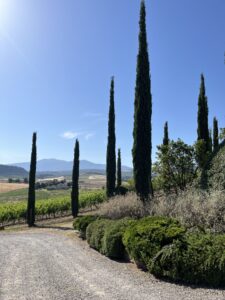
ColleMassari was founded in 1998 by the family Tipo-Bertarelli. The estate spans no less than 1200 hectares, of which a sizeable 120 hectares is under vine, and organically farmed. Our guide leads us around the minimalistic cellar building, which is designed with both tradition and innovation in mind: production is gravity-fed, and for the most part fuelled by solar panels. The barrel room is carved directly into the rock, making use of available resources to ensure constant temperature and humidity. We taste three wines: of these, DOC Montecucco Poggio Lombrone stood out, displaying sweet wood spice with classic Sangiovese red cherry and plum fruit. This sandstone vineyard is over seventy years old with some vines still ungrafted. In collaboration with the Universities of Pisa and Florence, Poggio Lombrone became the breeding ground for subsequent sites, effectively supporting an extensive massal selection programme — the goal being to explore and develop Sangiovese’s many biotypes in the region.
After a tour and tasting at ColleMassari we are taken to the winery’s nearby located hospitality location, where our hosts have prepared what can only be described as a feast. It is in this gastronomic setting that the wines truly come to life. Before leaving, we are invited into the castle, from whose balcony an enchanting array of twinkling lights can be seen along the length of the valley.
The takeaway
Maremma? Instantly one thinks of Bolgheri, of Super-Tuscans, of Cabernet Sauvignon and Syrah blends: powerful, full-bodied reds. But there is more to discover here. Although reds still rule the roost, the steady rise in popularity of white and rosé across the board has not left Maremma untouched. Recent statistics from the Consorzio back this up: roughly 58% of 2025 production was red, the remaining 42% white and rosé. Vermentino plantings in particular have risen dramatically. In the twenty years from 2000 to 2026, the number of hectares planted to this grape grew by 713%. To call this significant is an understatement.
Maremma is a relatively young area of Tuscany, and less restrictive appellation rules have led to an openness and creativity amongst producers. Currently, there is much discussion around yield restriction, as part of a wider debate on supply and demand throughout Italy. It will be interesting to see how the collective identity of Maremma develops, with smaller, overlapping denominations such as Montecucco and Morellino di Scansano providing more specific pockets of terroir-driven production.