A Montefalco 2026; by Claire Mumford
The land
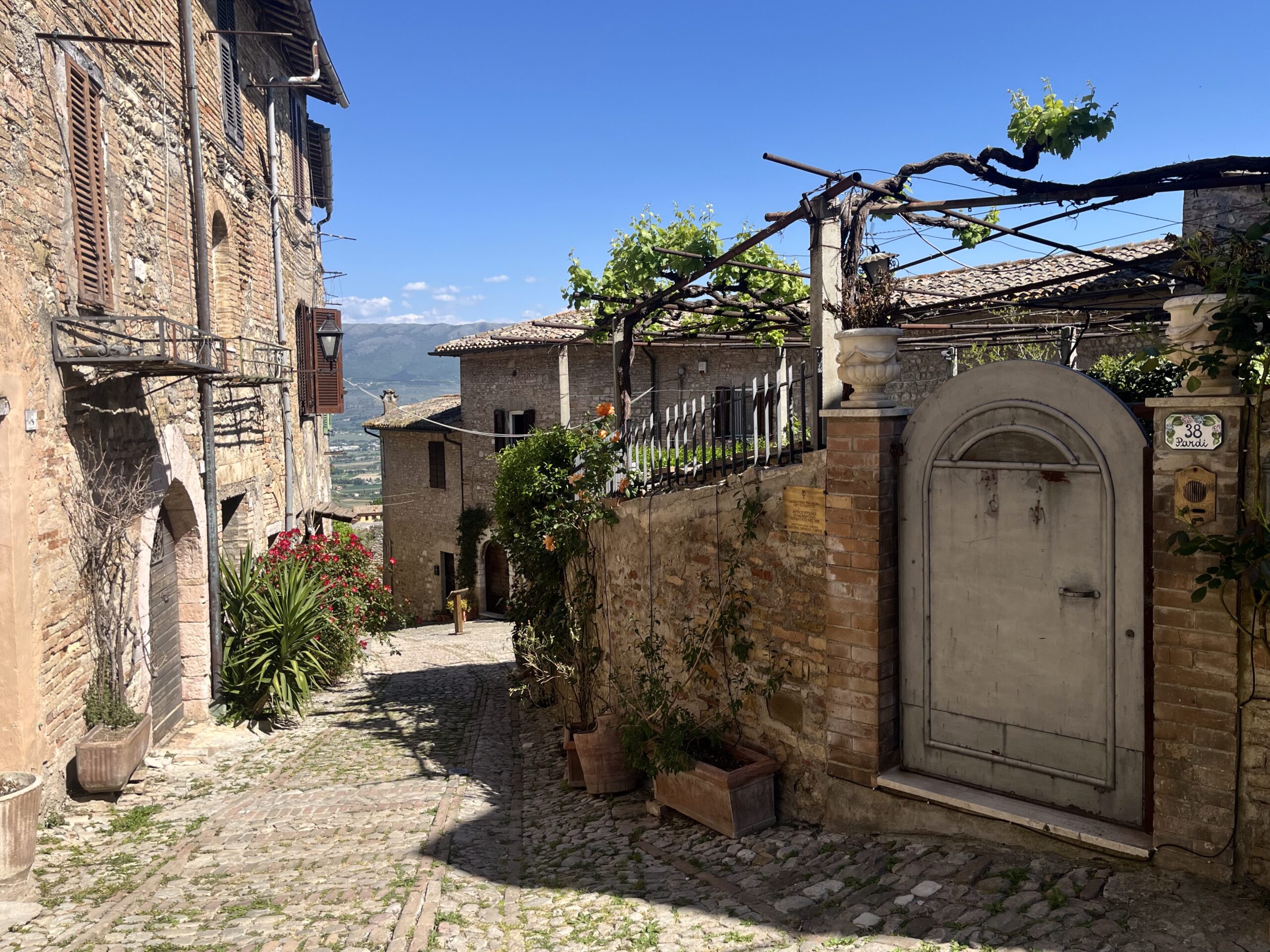
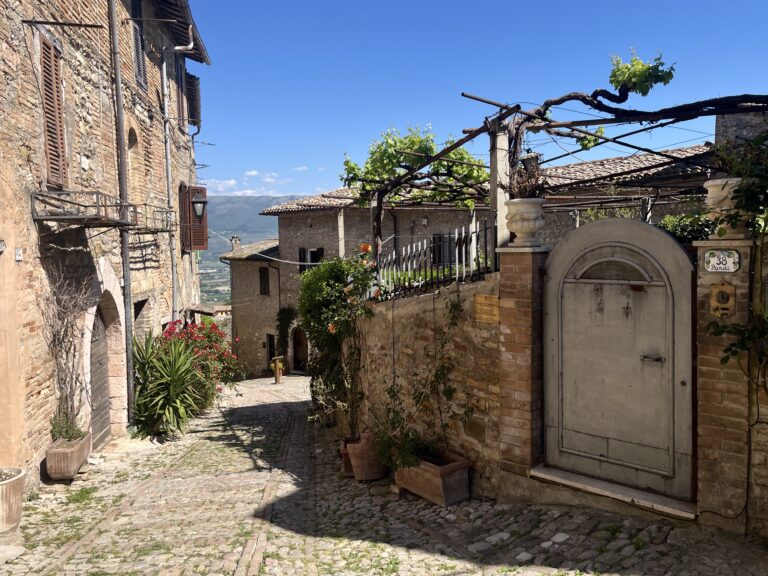
The verdant, rolling landscape of Umbria unfolds as we head from the airport in Rome to our destination: Montefalco, one of the 350 most beautiful towns of Italy – I Borghi più belli d’Italia. Dotted with pencil-thin cypresses, strewn with olive trees and vines, Umbria is often overlooked in favour of the more popular Tuscany. It’s all the more peaceful for it.
Montefalco, lying to the northwest of Spoleto and south of Bevagna, is a hilltop town rich in medieval architecture. Wine journalists and writers from Europe and beyond have gathered in this picturesque location for A Montefalco: Terra per il vini. Held annually by the Consorzio Tutela Vini Montefalco, the event serves to raise awareness of the wines of the appellation, and to launch the new vintage of DOCG Sagrantino. This highly characteristic black grape – Montefalco’s signature variety – has been grown here for centuries, and is indigenous to the region.

The varieties
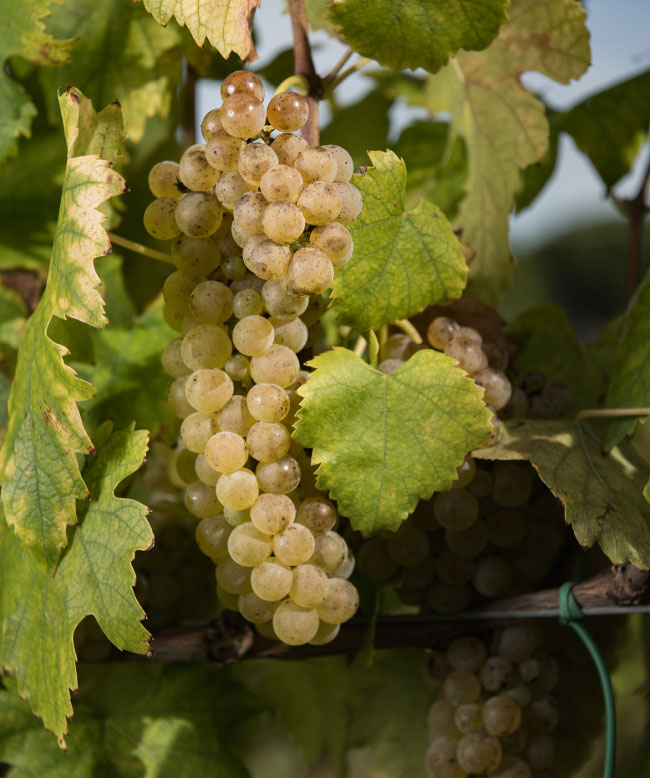
We are essentially referring to four main grapes: for reds, Sagrantino and Sangiovese, and for whites, Grecchetto and the local Trebbiano Spoletina. This last variety is exclusively Umbrian, and bears above all no relation to other Italian Trebbiano varieties.
Reds:
DOCG Sagrantino is 100% varietal, and is made in both dry and passito styles. In the DOC Montefalco Rosso blend we find in the main Sangiovese, with smaller percentages of not only Sagrantino, but in addition international varieties such as Merlot, Cabernet Sauvignon, and Syrah. DOC Montefalco Rosso Riserva comprises this same blend of varieties, but often shows greater concentration of fruit. Being a Sangiovese-driven blend, DOC Montefalco Rosso has a fresher, fruitier profile than DOCG Sagrantino, which is typically tannic and darkly spirited, displaying inky black fruits.
Whites:
Trebbiano Spoletino lends freshness and texture to Spumante DOC. In addition, Grecchetto DOC and Montefalco Bianco DOC (either Grecchetto or a Trebbiano blend respectively) and the Spoleto Trebbiano Spoletino (Superiore) DOC have characteristic herbal and stonefruit notes, zippy, 100% varietal. Last but not least: the honeyed, aromatic Trebbiano Spoleto Passito.

Openings
The Consorzio’s opening address marks the release of the current 2022 vintage. The fittingly picturesque location is the Complesso Museale San Francesco. The complex comprises a former Franciscan convent – now housing the civic museum – and a church, featuring beautiful fresco cycles from painter Benozzo Gozolli. A number of prestigious speakers are present, including Stefania Proietti, president of the Umbria region. Facilitated by journalist Jacopo Cossater, the panel members each deliver their individual take on developments within the appellation.
Mayor of Montefalco Alfredo Gentili refers to the EU resources being made available to foster the international market, chiefly through promotion of wine and food tourism. There is clear ambition to build a vision for the future, with emphasis being placed on new initiatives to help growers tackle growing viticultural obstacles, such as weather extremes, and disease pressure.
Paolo Bartolini, owner of winery La Cimate and current president of the Consorzio, delivers a speech focusing on the financial climate. He is keen to stress that although increasing tariffs, rising inflation, and the growing no/low market pose challenges, Montefalco has an advantage – a ‘USP’: only a handful of wine styles are made from its flagship indigenous grape varieties. Although the launch of the current vintage of Sagrantino is priority, the white grape Trebbiano Spoletino is most definitely growing in importance; plantings, we are told, are set to increase significantly in coming years. Clearly advantageous, given the worldwide uptake in white wine consumption.
Author and journalist Ian D’Agata introduces vintage 2022. He informs us that the wines are surprisingly fresh, despite dry and hot weather conditions; a mild winter and plentiful rain primed soils adequately for the season ahead, further aided by low (although not freezing) spring temperatures. D’Agata speaks of a constant, prolonged growing season with few extremes, which enabled the vines to ripen slowly. He concludes that this consistency gave the vines time to adapt, offering more resilience to summer heat, and that the resulting wines are approachable and well balanced. These observations were borne out later in tastings of the 2022 vintage, which although still relatively young, did generally present as less densely tannic.
Simona Meloni, Minister for Agriculture in Umbria, speaks of winemaking as a generational expression of culture, a story told by families. She points out that when this narrative changes, the physical landscape – the very fabric of the land – changes along with it. She stresses the importance of stimulating rural development, with ample support and opportunity for training for the younger generation, that the narrative may continue to grow. Whilst many remain committed to producing varietally characteristic Sagrantino, she feels there is also an openness, a willingness to respond to increased interest in lighter styles of wine within the broader appellation.
President of the AIS (the Italian association of Sommeliers) Sandro Camilli spoke of the Gran Premio del Sagrantino, a national competition in which sommeliers are rigorously tested on the grape, through tastings, pairings and technical assessment. He ends proceedings with the announcment of this year’s winner of the Etichetta d’Autore 2022, Martina Ferrari. The prize is awarded for the creation of an artwork which encapsulates the spirit of each new vintage of Sagrantino DOCG.
The Shape of Elegance
The theme of approachability is continued by Cristina Mercuri MW in her masterclass “The Shape of Elegance: Montefalco’s new wine grammar”, held in Chiostro Sant’Agostino. Sagrantino’s defining characteristic is its tannin structure. Mercuri addresses this directly, inviting us to think more specifically about the nature and function of tannin: perception of structure, quality of extract and interplay of tannin with other textural elements.
Diverse terroirs contribute to structural differences in the wines of Montefalco, with an array of aspects and altitudes impacting the influence of soils greatly. Broadly speaking, this is a tale of two halves. Soils in the north are mainly calcareous, which reduces vine vigour and is believed to lend density and richness to the wines. Soils in the south are more compact, and contain a greater proportion of clay; nutrient-rich, cooler clay soils slow ripening, promoting aromatic intensity.
Despite its reputation as a flagship variety, Sagrantino suffers, Mercuri feels, from its rustic image and lack of brand definition. She claims producers are currently moving toward more elegant styles of Sagrantino. Longer, cooler fermentations and a reduction in the use of new oak help to create more finesse and varietal, aromatic definition. The white variety Trebbiano Spoletino has a thick skin, and ripens late, meaning it can withstand prolonged hang time without disease pressure. This allows for many styles of wine, including those involving skin maceration. For this reason the winemakers of Montefalco produce Trebbiano Spoletino in a wide variety of styles. Some feel this inhibits clear communication, whilst others celebrate the diversity. Vibrant acidity and a compelling salinity are a common thread.
In her guided tasting, Mercuri makes interesting comparisons with wines from other premium regions – placing Trebbiano Spoletino DOC alongside Etna Bianco DOC, pairing Montefalco Rosso DOC with Terre de Pisa DOC, and Sagrantino DOCG with Saint-Estèphe AOC from Bordeaux. She invites us to focus on contrast and similarities in texture and aromatic precision in all of the wines, the intention being to demonstrate that these wines can hold their own.


The wines and their makers
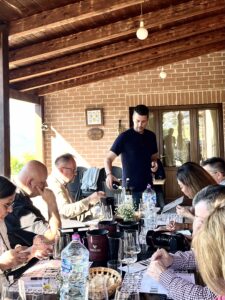
Over three days, thirty producers from the Montefalco and Spoleto appellations opened their doors, offering tutored tastings and food pairings. During this time, Montefalco’s Sala Consiliare in the town square formed the stately, sumptuously decorated backdrop for an appellation-wide tasting. Proceedings here were led by a highly professional team of sommeliers.
Of these thirty, my own winery visits included Terre de’ Trinci, Le Cimate, Antonelli, Scacciadiavoli, Ninni, Romanelli and Arnaldo Caprai. Although all are working mainly with the aforementioned varieties to appellation specifications, the diversity of approach and execution between producers was marked. All were united in their desire to showcase the land and culture through the grape, with many single-vineyard cuvées further highlighting the specifics of aspect and soils.
Terre de’ Trinci
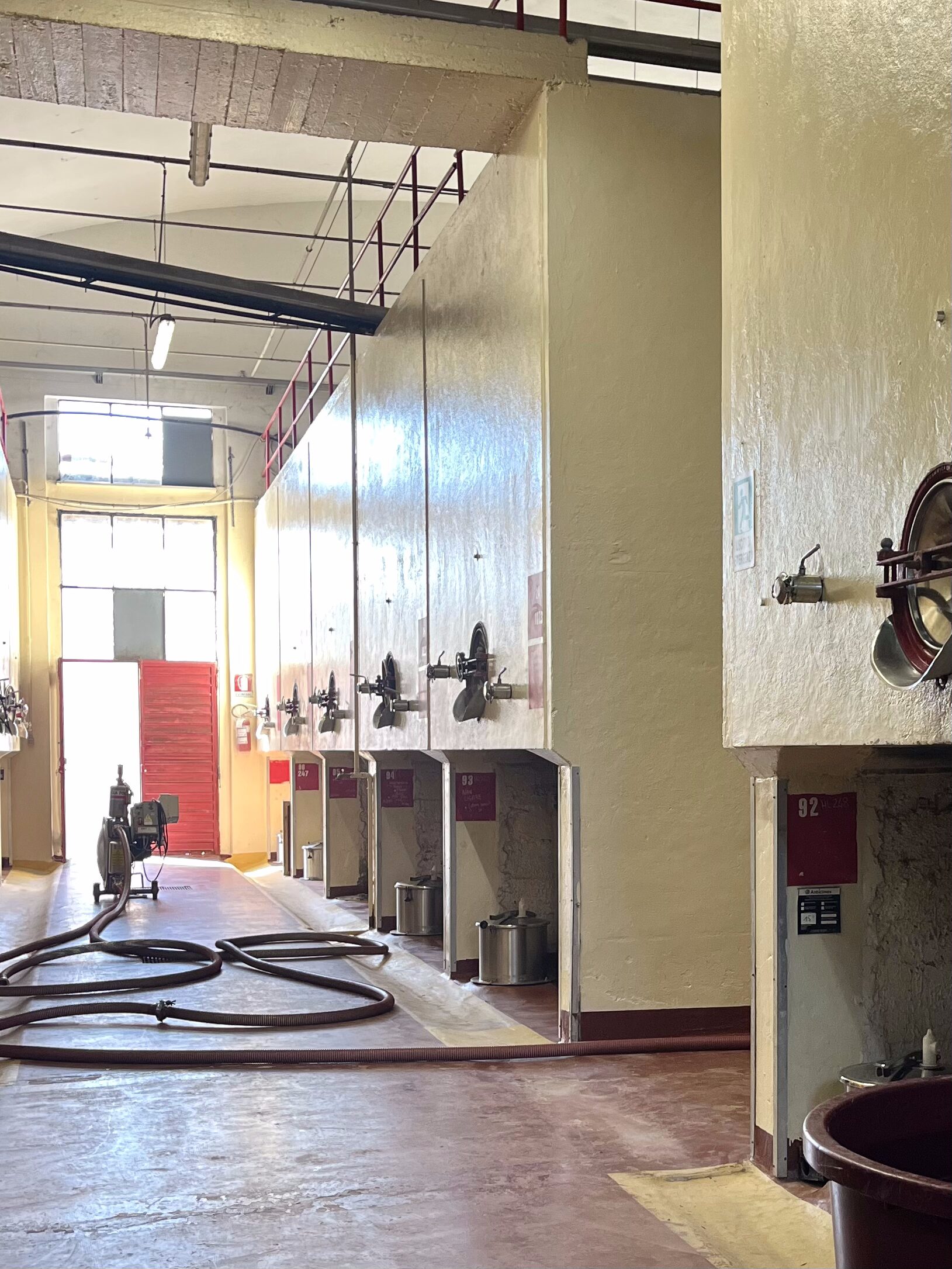
First visit is Terre de’ Trinci, where we are greeted by our smiling host, Lorenzo Mattoni. This is a cooperative; wines from more than a hundred producers are made here, ensuring the continuation of a local winemaking tradition spanning generations, Lorenzo informs us. The collective hectorage is 140 hectares, 1.2 hectares of which is for their own production, from which they make the Fideli range. Twenty days on skins gives the Trebbiano Spoletino 2024 a good concentration of yellow fruits and quince. Both the Montefalco Rosso 2023 and Montefalco Rosso Riserva 2021 are Sangiovese dominant, with varying percentages of Sagrantino and Merlot; the concrete-aged Rosso is soft and fragrant with black cherry, herbal and iodine notes, while a larger proportion of Sagrantino and oak ageing give more structure and polish to the Riserva. To finish, the current 2019 Sagrantino, followed by vintages 2000 and 1994: snapshots of a grape in time, revealing in particular how its young, chewy tannins can evolve and soften.
Le Cimate
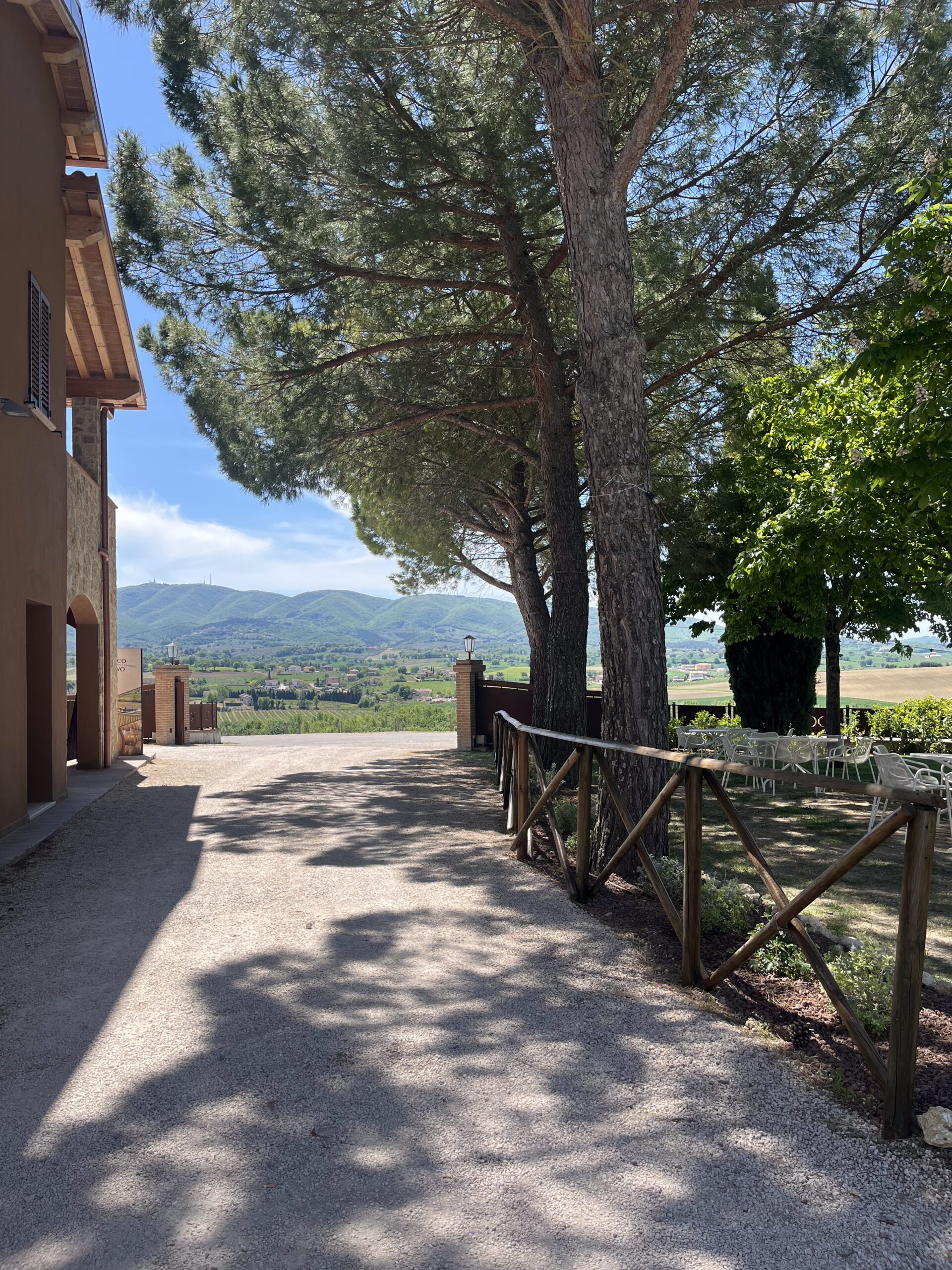
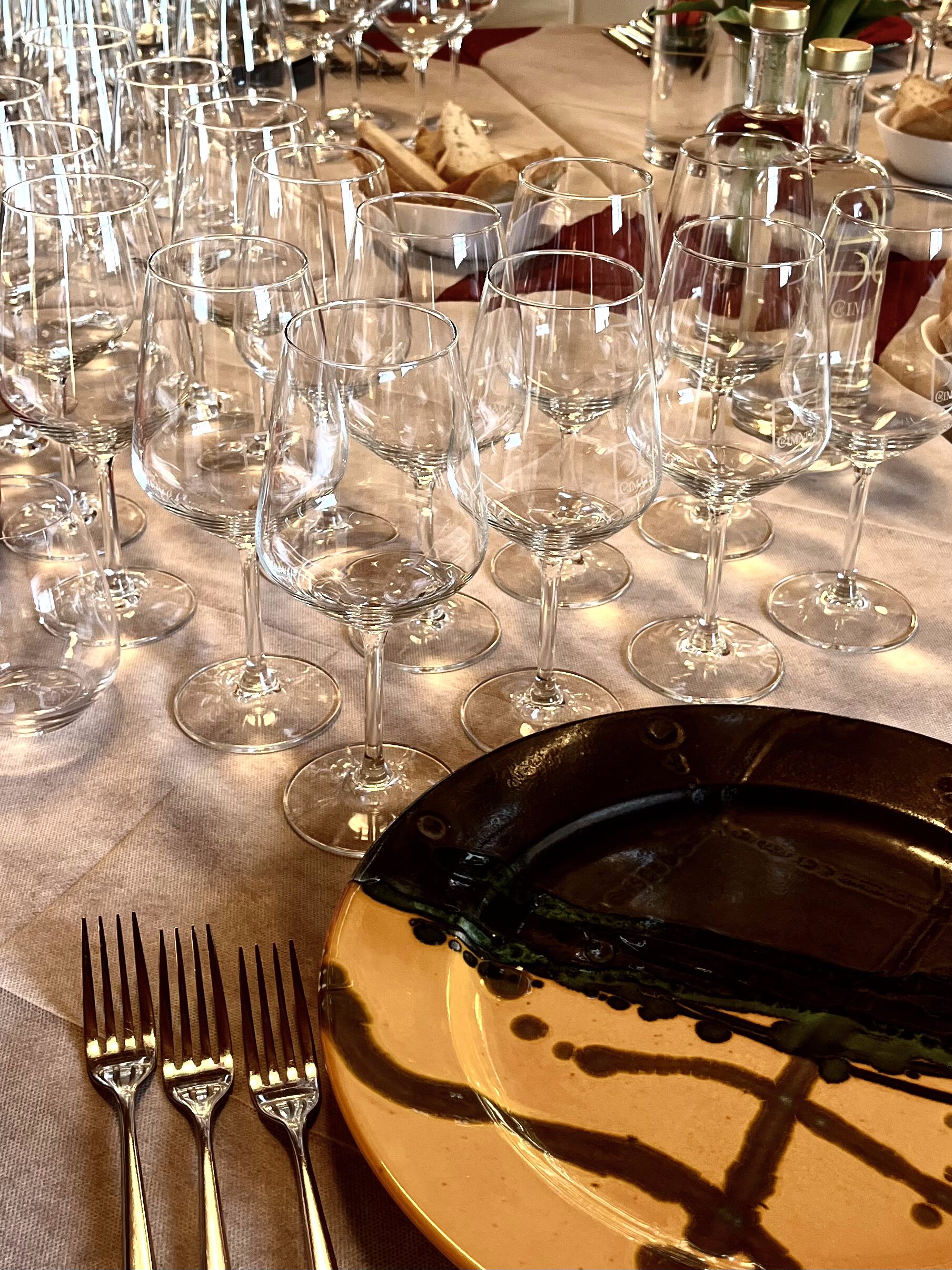
Current president of the Montefalco Consorzio and owner of winery Le Cimate, Paolo Bartolini is our host. The large 164-hectare estate is not only home to vines and olives, but also to hazelnuts, from which they make a spectacular chocolate spread. During a tour of the winery Bartolini is again keen to speak about white wine production in the region in general, in line with his earlier Consorzio speech. Although red – specifically DOCG Sagrantino and DOC Montefalco Rosso (Riserva) – remain core classics, producers also see white production as key to the region’s future development. As a result, there are significant plans to increase white plantings, with proposals currently awaiting government approval. Over lunch we try a range of Le Cimate wines, beginning with a lean, brut nature, traditional method sparkling wine from Trebbiano Spoletino. There are two whites from this same grape with entirely different expressions, mainly due to winemaking methods: one briefly macerated in stainless steel, the other barrel-fermented and aged in French oak. The flagship cuvee Montefalco Sagrantino DOCG Donna Giulia spends four months in amphora, forty-eight months in Austrian oak and forty-eight months in bottle; we try the current release, 2016. The wine is dense, powerful and brooding, with dried black fruit and balsamic notes.




Antonelli
A family winery dating back 140 years. They grow only varieties native to the area, and farm organically. Filippo Antonelli walks us around the vineyards, pointing out one in particular; Vigna Tonda, an oval-shaped plot of Trebbiano Spoletino. First planted in 1902, it has retained its original form, although many of the vines have been replaced over time. Although Filippo teasingly laments its hugely impractical and inefficient layout, he is keen to express his fondness for it. The grapes from this plot ferment spontaneously in unglazed terracotta, ceramic and concrete, with long maceration on skins: it is a single-vineyard cuvée. The resulting wine has a clarity of fine, pristine fruit. Trebium is also 100% Trebbiano Spoletino, and ferments on full lees in large oak barrels; we try both the 2024 and 2010 vintages. The fruit evolves from crisp and bright to honeyed quince, apricot and truffle – but retains a distinct freshness. The delicious, traditional method, brut nature sparkling is also made from this variety – serving to demonstrate its chameleon-like potential for quality.
Scacciadiavoli
The winery, established in 1884, takes its name from a local exorcism legend featuring red wine, most likely Sagrantino; the name means quite literally ‘banish the Devil’. The estate is owned by the Pambuffetti family, and lies around an impressive central courtyard. Liu Pambuffetti shows us around the historic winery, which is served by a surprisingly modern gravity-fed system. Large, used oak is the vessel of choice for Sagrantino, to soften its firm tannic structure during long periods of ageing. The Trebbiano Spoletino is made in clay amphoras, lined with cocciopesto – an ancient, sustainable building mixture. It is made from crushed terracotta mixed with lime, and forms a waterproof yet breathable layer. We enjoyed a menu of intricate dishes, paired with a range of the winery’s cuvées, finishing with the Sagrantino Passito – one of the freshest examples tasted, and a perfect match for the chocolate dessert.
Ninni
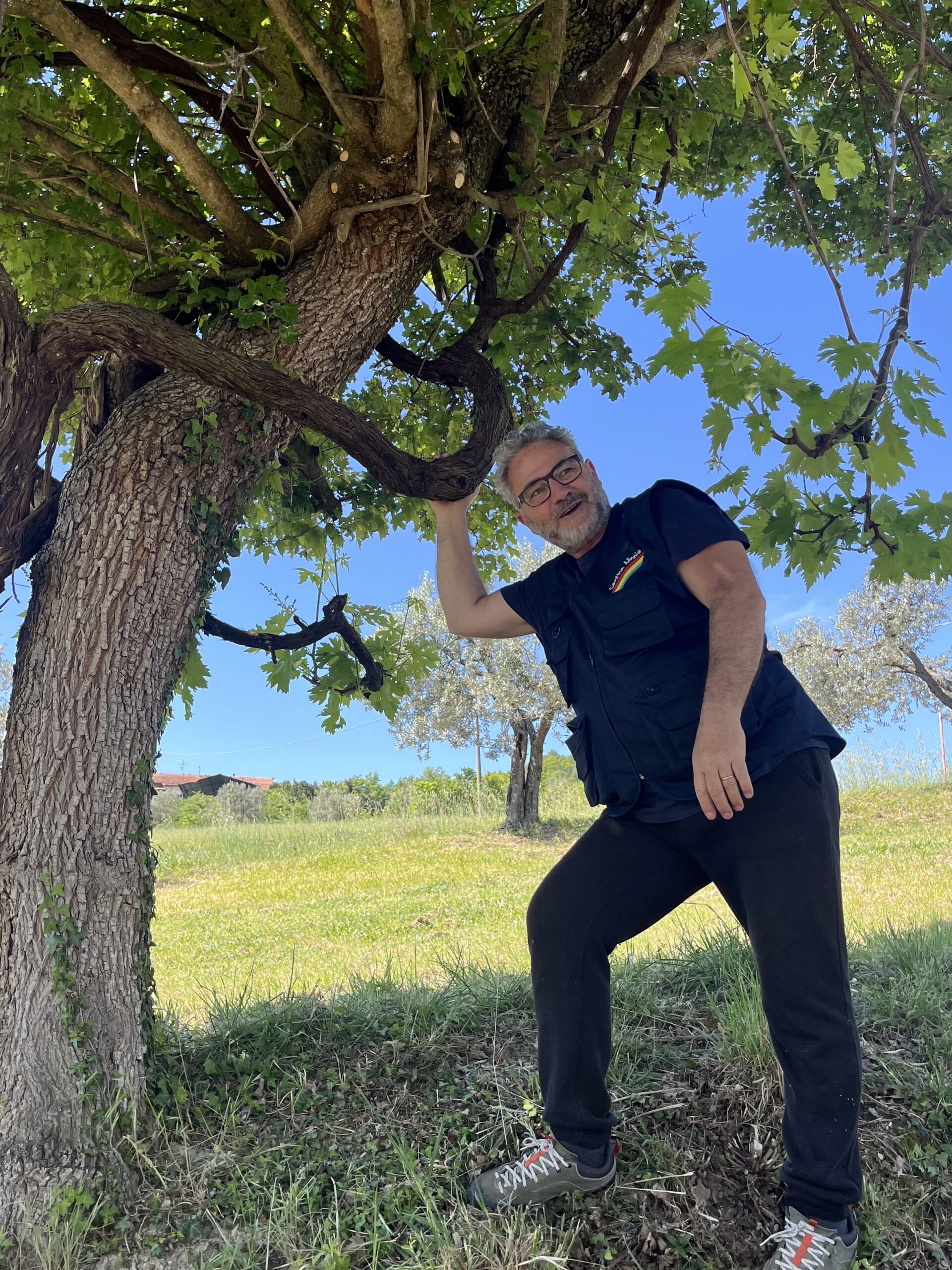
A visit to Ninni in Spoleto is quite the experience. Owner Gianluca Piernera is an animated host, and his enthusiasm is infectious. The vineyards surrounding the property are predominantly planted to Trebbiano Spoletino, from which he makes interesting skin-contact whites – although he also grows Barbera, Sangiovese, Montepulciano, and Aleatico. Fascinating are the 200-year-old Trebbiano Spoletino vines growing in trees, an age-old tradition which pre-dates any modern trellising system. It is quite special to behold such an old vine thriving in what is, after all, its most natural state. Supported by the trees’ solid framework, the vine regulates its own growth needs and the subsequent amount of fruit it produces. Modern agroforestry approaches are founded on these kinds of symbiotic relationships, aiming to reintroduce an ecological balance often lost in monocultural vineyard practice.


Romanelli
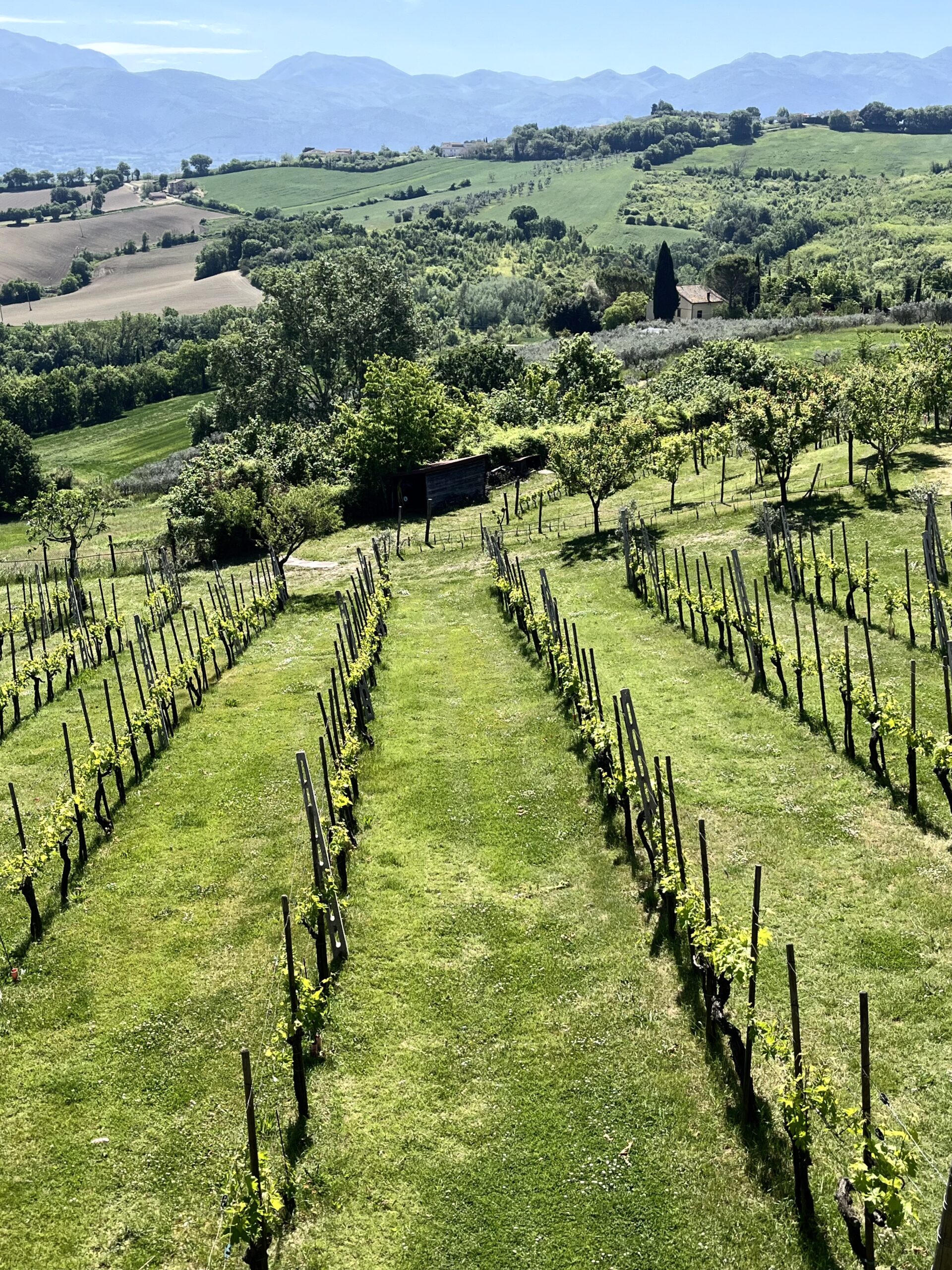
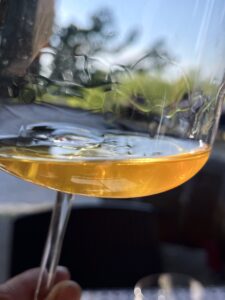
The view from the hillside winery at Romanelli is expansive, stretching across a wide valley to Assisi. Here the family farms 30 hectares of vines and olive trees organically, the often sun-drenched slopes benefiting from cooling breezes. We taste a range of wines. 100% Sagrantino forms the backbone of both Terra Cupa 2020 and Medeo 2019, but their differing soils – stony clay and calcareous respectively – offer two expressions: Medeo displays more extract, Terra Cupa more fruit. There is an interesting comparison between 100% Trebbiano Spoletino La Tese 2022 and 2017, the latter being the first-ever vintage. Extended skin contact (respectively 70 and 60 days) lends these amber-coloured wines a range of succulent yellow plum and blood orange flavours, with beautiful peach skin textures.
Arnaldo Caprai,
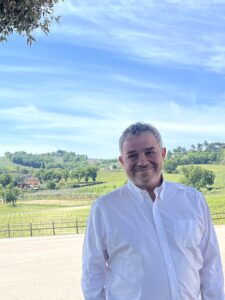
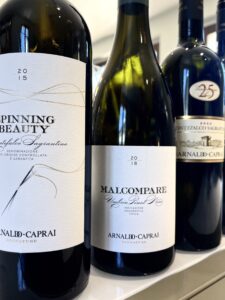
Here, Sagrantino takes centre stage; although 40% of production is white and production is large and diverse, the focus here is red. Caprai produces no less than five 100% Sagrantino wines, and a further five red blends. Working previously with renowned Bordeaux oenologist Michel Rolland, the winery has focused predominantly on creating powerful, structured expressions of Sagrantino, with the best-known being the 100% Sagrantino Spinning Beauty. This wine is fermented on skins in custom-made, rotating barrels. All of the reds (including the Sangiovese-based Rosso and Rosso Riservas) are aged in French oak barriques, giving a clear house signature: these are big wines, ripe and polished, with plenty of extract and alcohol. The property itself has a luxurious feel, and offers stunning views across the vineyards. Caprai embodies the spirit of classic DOCG Sagrantino.






The way forward
It is not hard to comprehend the deep affinity these growers and makers quite obviously feel with their land: there is a sense of genuine and continued generational craftsmanship rooted in this uniquely beautiful landscape. At present, all crop growers face unprecedented challenges. There is a growing urgency to respond and adapt to a climate of increasing extremes, whether environmental, political and/or financial. Over-production of largely mediocre wine is a global issue. Markets are calling for more white wine, and for lower or non-alcohol alternatives. Smart producers can see the writing on the wall: sustainable, intentional, quality practice is the way forward.
The ‘USP’ to which Paolo Bartolini refers in his opening speech rests notably upon this appellation’s unique varieties, Sagrantino and Trebbiano Spoletino, both of which have potential for premiumisation. Mastery of Sagrantino’s tannin structure to create more elegant styles is key, as is the promotion of Trebbiano Spoletino as a quality white variety unique to the region. The growers of Montefalco, grounded within the context of and with respect for their viticultural heritage, are most definitely playing to their strengths. The future looks bright.
